Buying coffee can feel overwhelming — origin names, tasting notes, roast dates, certifications… what does it all mean? If you’ve ever stood in front of a wall of coffee bags unsure which one to pick, you’re not alone.
This article will teach you how to read and understand coffee labels, so you can choose beans that match your taste preferences, brewing style, and values.
Why Coffee Labels Matter
Coffee labels give clues about:
- Flavor profile
- Freshness
- Roast level
- Where and how the coffee was grown
- Sustainability and ethics
Knowing how to decode these details helps you make better buying decisions — and enjoy better coffee.
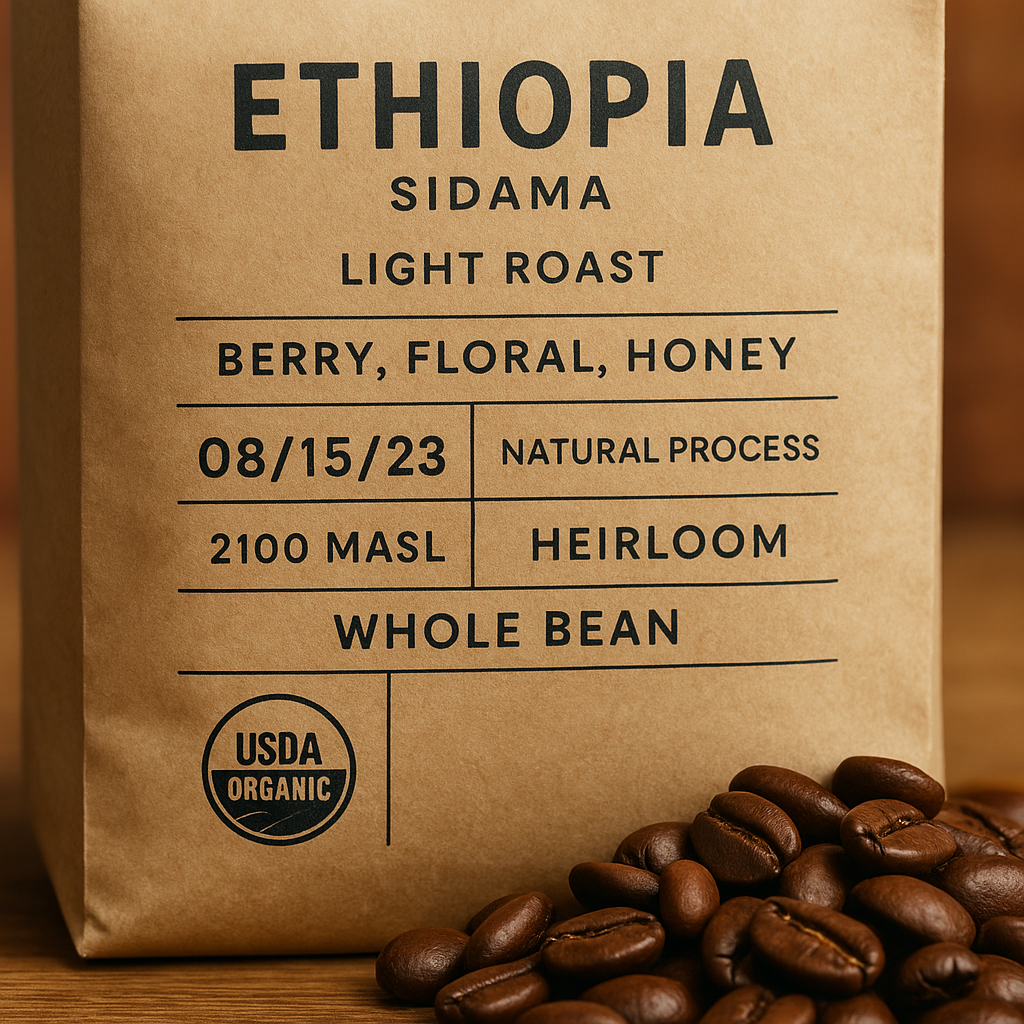
Key Elements on a Coffee Label (And What They Mean)
1. Origin
Look for the country and sometimes the region or farm where the coffee was grown.
Examples:
- Ethiopia (Yirgacheffe)
- Colombia (Huila)
- Brazil (Minas Gerais)
- Kenya (Nyeri)
Why it matters: Origin affects flavor.
- Africa: fruity, floral, tea-like
- Latin America: chocolatey, nutty, balanced
- Asia: earthy, spicy, full-bodied
2. Roast Level
Most labels will say:
- Light roast: Bright, acidic, highlights origin flavors
- Medium roast: Balanced, smooth, versatile
- Dark roast: Bold, smoky, less acidic, more bitter
Choose based on your taste and brewing method.
- Light for pour-over or filter
- Medium for drip or AeroPress
- Dark for French press or espresso
3. Tasting Notes
Words like “berry,” “chocolate,” “caramel,” or “floral” describe the flavor profile — not added flavors, but natural notes from the bean and roast.
Examples:
- “Strawberry, black tea, lime”
- “Dark chocolate, almond, molasses”
Use these notes to explore what you enjoy. Try comparing two coffees with different notes and see which you prefer.
4. Roast Date (Not Just “Best By”)
Freshness is key. Look for:
- A roast date, not just a “best by” date
- Coffee is best within 2–4 weeks of roasting (for whole beans)
- Avoid coffee that was roasted months ago
If you’re buying pre-ground coffee, aim to use it within a week of opening.
5. Processing Method
Describes how the fruit was removed from the coffee bean:
- Washed: Clean, bright, crisp
- Natural (Dry): Fruity, sweet, wine-like
- Honey (Semi-washed): Balanced, smooth, sweet
Processing impacts flavor and body. Try different methods to find what suits your taste.
6. Altitude
Often listed in meters above sea level (masl).
- Higher altitudes (1200+ masl) usually mean:
- Denser beans
- Brighter acidity
- More complex flavors
Lower altitudes (under 1000 masl) tend to be more mellow and chocolatey.
7. Variety
The type of coffee plant (like Arabica or Robusta). Within Arabica, you might see names like Bourbon, Typica, SL28, or Geisha.
You don’t need to memorize these, but it’s fun to explore how different varieties taste.
8. Certifications
- Organic: Grown without synthetic pesticides
- Fair Trade: Ensures minimum prices and ethical labor
- Rainforest Alliance: Focuses on sustainability
- Direct Trade: Roaster buys directly from farmers
These can reflect a roaster’s values, but remember: not all ethical farms can afford certification — transparency matters more.
9. Grind Type (If Pre-Ground)
Look for grind suited to your brew method:
- Coarse for French press
- Medium for drip
- Fine for espresso
Whenever possible, buy whole beans and grind fresh — flavor lasts longer.
How to Choose the Right Coffee for You
- Start with roast level
Light for bright flavors, dark for rich and bold. - Pick a flavor profile you like
Do you enjoy fruity or chocolatey notes? Nutty or floral? - Try different origins
Explore Latin America, Africa, and Asia for variety. - Pay attention to freshness
Always check the roast date. - Buy from trusted roasters
Look for transparency about sourcing and roasting. - Don’t fear the unknown
The best way to learn is to try something new — one bag at a time.
Final Sip: Become a Smarter Coffee Drinker
Reading a coffee label might seem like a small thing, but it can totally change how you shop, brew, and enjoy your coffee. With a little practice, you’ll confidently pick beans that match your taste and values — and make every cup more satisfying.
So next time you’re at the store or browsing online, read the label like a barista. Your perfect cup is waiting.