
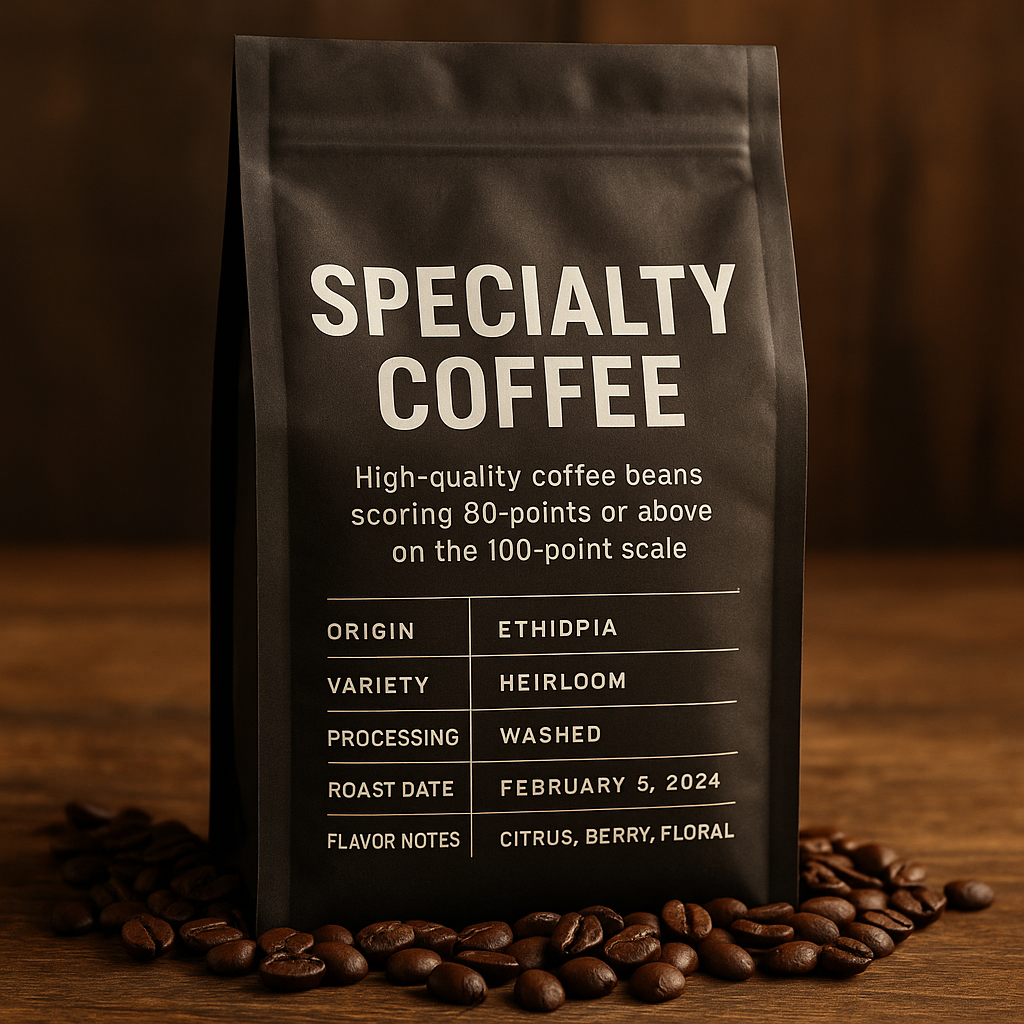
If you’ve walked into a modern coffee shop or browsed an online roaster, you’ve probably seen the term “specialty coffee”. But what does it actually mean? Is it just a trendy label — or does it reflect something deeper?
In this article, we’ll break down what defines specialty coffee, how it’s graded, and why it matters — both for your taste buds and the people who grow your coffee.
What Is Specialty Coffee?
Specialty coffee refers to high-quality coffee beans that are grown in ideal conditions, carefully processed, roasted with precision, and brewed to highlight their unique flavor characteristics.
It’s not just good coffee — it’s coffee that meets rigorous standards from farm to cup.
Official Definition
The Specialty Coffee Association (SCA) defines specialty coffee as:
- Beans that score 80 points or above (out of 100) on a quality scale
- Graded by certified coffee tasters known as Q Graders
- Free from major defects in appearance and taste
This score is based on aroma, acidity, body, balance, aftertaste, and more.
How Specialty Coffee Is Different from Commercial Coffee
| Feature | Specialty Coffee | Commercial Coffee |
|---|---|---|
| Quality | High scoring (80+), no defects | Lower scoring, more defects |
| Origin | Often single-origin, traceable | Often blends, little traceability |
| Flavor | Unique, complex, terroir-driven | Simple, consistent, often bitter |
| Farming Practices | Handpicked, sustainable methods | Mass-produced |
| Price | Higher (but fairer to farmers) | Lower (but with ethical concerns) |
The Journey of Specialty Coffee: Farm to Cup
- Farming
Grown at high altitudes, often in microclimates that enhance flavor. Farmers pay close attention to soil, harvesting methods, and timing. - Processing
After picking, beans are processed using methods like:
- Washed (clean, crisp)
- Natural (fruity, sweet)
- Honey (balanced, smooth)
- Grading and Scoring
Samples are roasted, cupped, and scored by professionals. Only coffees that meet the 80+ threshold are labeled specialty. - Roasting
Specialty roasters develop custom roast profiles to highlight origin flavors, not hide defects. - Brewing
The final cup is prepared using techniques (like pour-over or espresso) that preserve clarity, balance, and aroma.
Why Specialty Coffee Matters
1. Better Taste
You get to enjoy nuanced flavors — like jasmine, citrus, or dark chocolate — instead of flat, bitter brews.
2. Ethical Sourcing
Specialty coffee often involves direct trade or long-term relationships with farmers. This means:
- Higher wages
- Better working conditions
- Incentives for sustainable practices
3. Transparency
With specialty coffee, you can often trace your beans to a specific farm or co-op — sometimes even to a single lot.
4. Sustainability
Producers are more likely to use environmentally responsible methods, including shade-grown farming, organic practices, and low-water processing.
How to Identify Specialty Coffee When Buying
- Score or grade listed (80+ points)
- Origin information (country, region, farm, altitude)
- Processing method (washed, natural, etc.)
- Roast date (freshness matters)
- Flavor notes (not artificial flavoring — real tasting notes)
- Certifications (optional but often present: Organic, Fair Trade, Rainforest Alliance)
Specialty Coffee vs. Premium Coffee
Not all high-end or “gourmet” coffee is specialty.
- Specialty coffee = scored and verified by standards
- Premium coffee = marketing term, no scoring required
Always check for traceability, quality info, and roast date to be sure.
Is Specialty Coffee Worth It?
Yes — if you care about:
- Flavor quality
- Ethical sourcing
- Freshness
- Sustainability
- Supporting small farms and independent roasters
Specialty coffee is an experience, not just a beverage. You’re tasting a product of care, knowledge, and craftsmanship.
Final Sip: It’s More Than Just a Cup
Specialty coffee is about more than caffeine — it’s about respecting the journey from the seed to your mug. When you choose specialty, you’re choosing quality, sustainability, and fairness.
Next time you sip a cup that says “specialty,” take a moment to taste the difference — and know that behind every note of citrus, berry, or chocolate is a story worth brewing.