
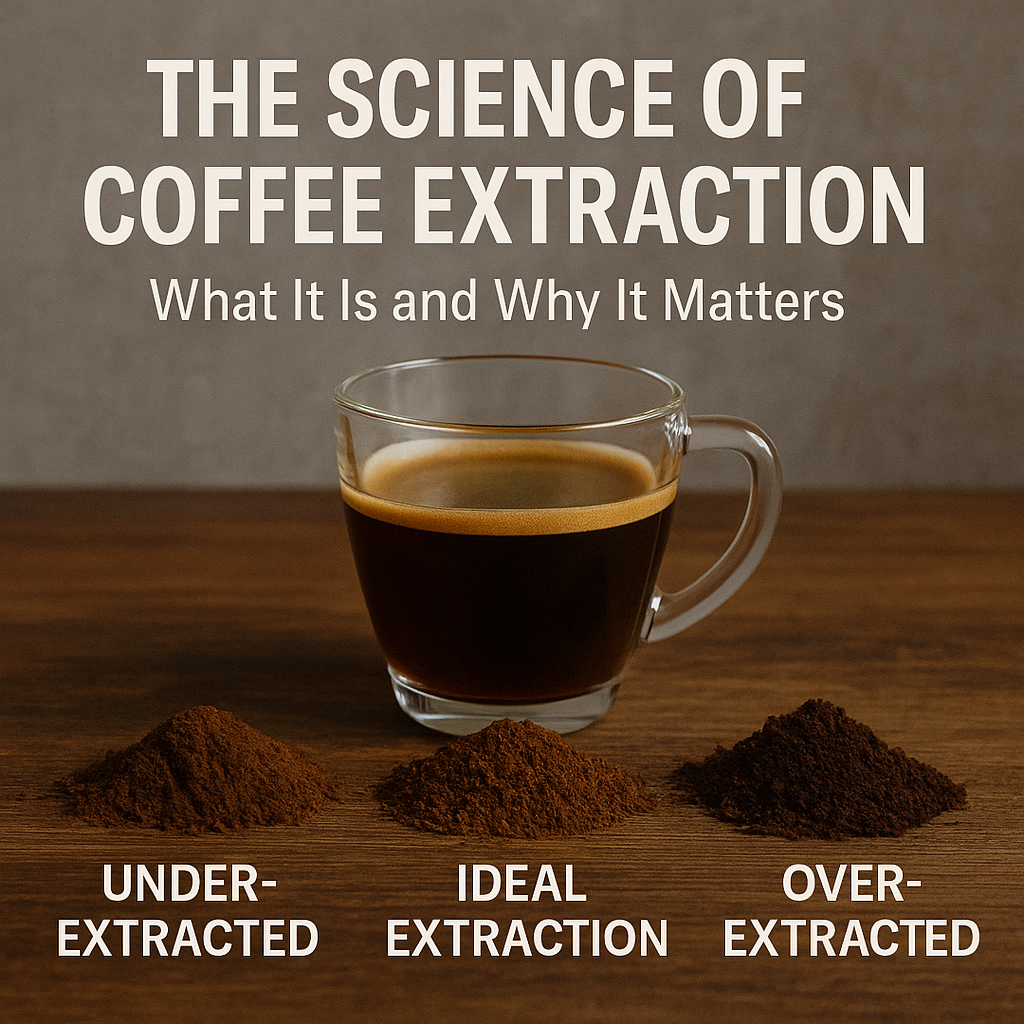
You’ve probably heard the term extraction tossed around in coffee conversations — but what does it actually mean? And how does it affect the flavor of your brew?
Understanding extraction is key to mastering coffee brewing. Whether you’re making pour-over, espresso, or French press, getting the right extraction will make the difference between a delicious cup and a bitter or sour disappointment.
In this article, we’ll break down what coffee extraction is, how it works, and how to control it.
What Is Coffee Extraction?
Extraction is the process of dissolving soluble compounds from ground coffee into water.
These compounds include:
- Acids (bright, fruity flavors)
- Sugars (sweetness)
- Oils and aromatics (body and aroma)
- Bitter compounds (balance and depth)
When hot water comes into contact with coffee grounds, it pulls out these compounds in a specific order.
The Order of Extraction:
- Acids – Extracted first
- Sweetness – Extracted next
- Bitterness – Extracted last
A well-extracted cup balances all three.
Over-Extraction vs. Under-Extraction
Getting the balance right is essential. Here’s what happens if you don’t:
Under-Extracted Coffee
- Brewed too quickly or with too coarse a grind
- Only acids and light compounds extracted
Flavor: Sour, sharp, salty, thin
Over-Extracted Coffee
- Brewed too long or with too fine a grind
- Pulls out bitter, astringent compounds
Flavor: Bitter, dry, hollow
Ideal Extraction
- Balanced sweetness, acidity, and mild bitterness
- Smooth, complex, full-bodied
Key Factors That Affect Extraction
1. Grind Size
- Finer grind = More surface area = Faster extraction
- Coarser grind = Less surface area = Slower extraction
Match grind size to your brewing method:
- Espresso: Fine
- Pour-over: Medium-fine
- Drip machine: Medium
- French press: Coarse
- Cold brew: Extra coarse
2. Brew Time
- Longer brew time = more extraction
- Shorter brew time = less extraction
Each method has an ideal time:
- Espresso: 25–30 seconds
- Pour-over: 2.5–4 minutes
- French press: 4 minutes
- Cold brew: 12–24 hours
3. Water Temperature
- Ideal: 195–205°F (90–96°C)
- Too hot = over-extraction (bitter)
- Too cool = under-extraction (sour)
4. Coffee-to-Water Ratio
More coffee = stronger brew, but also affects extraction time and intensity.
Standard ratio: 1:15 to 1:17
- 1 gram of coffee for every 15–17 grams of water
Use a scale for consistency.
5. Agitation and Flow Rate
- Stirring or blooming coffee helps even extraction
- Uneven pouring or channeling (in espresso) can cause over/under-extraction in parts of the puck
Aim for consistency and even saturation.
How to Measure Extraction (For Coffee Nerds)
If you’re really into the science, you can use a refractometer to measure:
- TDS (Total Dissolved Solids): Percentage of coffee in the liquid
- Extraction Yield: How much of the coffee was extracted (ideal: 18–22%)
Most home brewers won’t need to go this far — but it’s good to know if you’re chasing café-level precision.
Fixing Extraction Problems
Here’s a simple guide:
| Problem | Likely Cause | Solution |
|---|---|---|
| Sour, sharp taste | Under-extracted | Use finer grind or longer brew |
| Bitter, dry taste | Over-extracted | Use coarser grind or shorter brew |
| Weak, watery | Too much water / short time | Adjust ratio or grind finer |
| Overly strong | Too much coffee / long time | Dilute or grind coarser |
Why Extraction Is So Important
You could use the best beans, the best machine, and the purest water — but if your extraction is off, your coffee will still taste wrong.
Once you understand how extraction works, you can:
- Troubleshoot bad brews
- Fine-tune your method
- Consistently make better coffee
Final Sip: Taste the Science
Extraction is where science meets flavor. By controlling the way water pulls flavor from your beans, you take charge of your cup like never before.
So next time your coffee tastes off, don’t blame the beans — check your grind, time, and temperature. A small adjustment might be the secret to your best brew yet.