
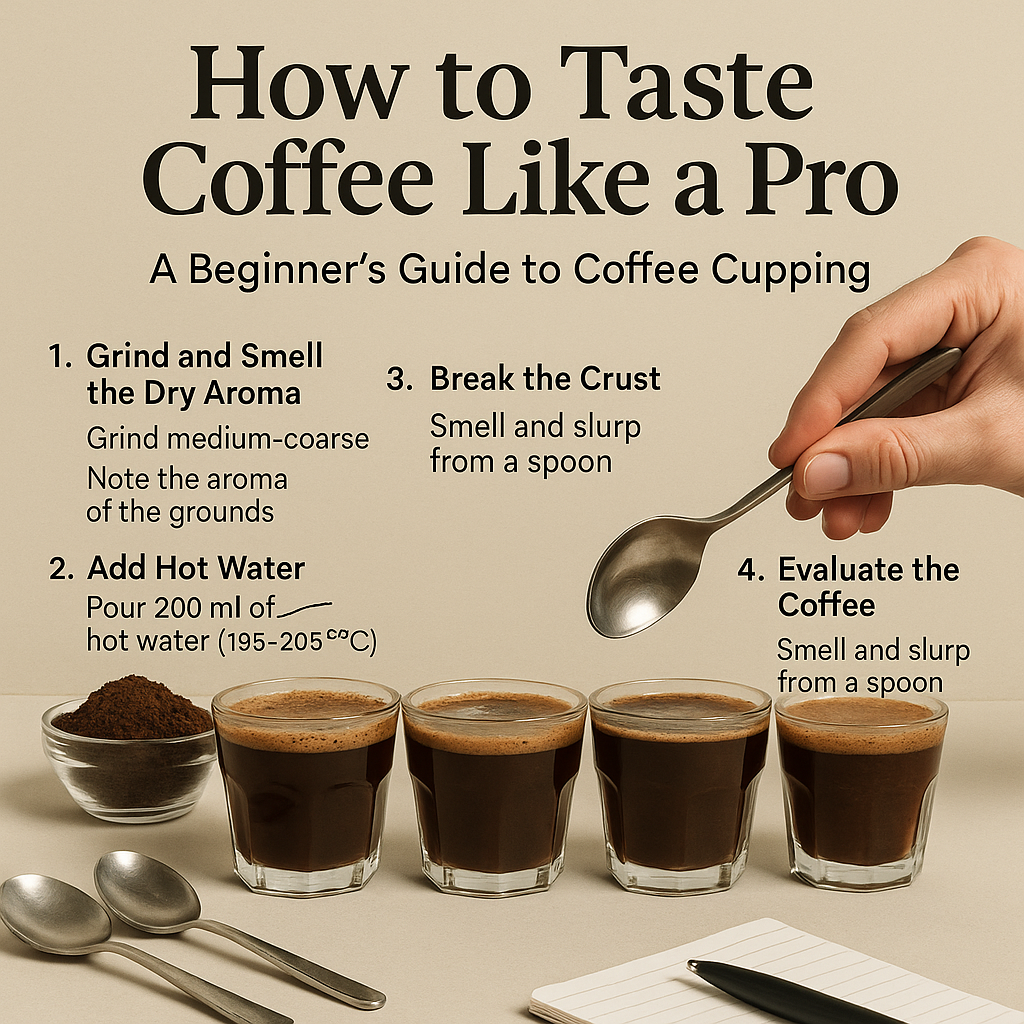
You already know that coffee can taste like more than just “coffee.” From floral Ethiopian beans to chocolatey Brazilian blends, the flavors in a cup are surprisingly complex — if you know how to identify them.
Professional baristas and roasters use a process called coffee cupping to evaluate beans. But you don’t need to be a pro to taste coffee like one. In this article, you’ll learn how to taste coffee properly, what to look for, and how to develop your palate.
What Is Coffee Cupping?
Cupping is the standardized method coffee professionals use to evaluate a coffee’s aroma, flavor, and quality. It involves:
- Brewing coffee without a filter
- Tasting it with a spoon
- Noting specific flavor characteristics
It’s like wine tasting, but for coffee — and it’s a powerful way to understand what’s in your cup.
Why Learn to Taste Coffee?
- Discover what you actually like in coffee (fruity, nutty, chocolatey, etc.)
- Learn how origin, roast, and process affect flavor
- Understand how to choose better beans
- Appreciate the complexity and craft behind each cup
What You’ll Need for a Home Coffee Tasting
- 2–4 different coffees (ideally single-origin)
- Burr grinder
- Kettle (with temp control if possible)
- 12g of coffee per cup (whole beans)
- 200ml of water per cup (195–205°F / 90–96°C)
- 2 spoons (preferably deep)
- Timer
- Bowls or glasses for each coffee
- Pen and paper for notes
Optional: Cupping form or flavor wheel
Step-by-Step: How to Do a Coffee Cupping
1. Grind and Smell the Dry Aroma
- Grind each sample medium-coarse
- Place the grounds in a separate bowl
- Smell each one — this is the dry aroma
- Note what you detect: nuts, berries, chocolate, citrus?
2. Add Hot Water
- Pour 200ml of hot water (195–205°F) over each sample
- Start a 4-minute timer
- Don’t stir yet — let the grounds bloom
3. Break the Crust
- After 4 minutes, use a spoon to gently break the crust
- Smell the steam — this is the wet aroma
- Write down what you smell now (it may be different!)
4. Remove Grounds and Begin Tasting
- Skim off the floating grounds with a spoon
- Let the coffee cool slightly
- Slurp the coffee from your spoon loudly — this spreads it over your palate
- Spit or swallow (up to you)
5. Evaluate the Coffee
As you taste, consider these attributes:
Flavor
- What are the dominant notes? (Fruity, nutty, spicy?)
Acidity
- Bright and crisp, or flat and muted?
Body
- Light like tea, or heavy and creamy?
Sweetness
- Is it naturally sweet or dry and bitter?
Aftertaste
- How long does the flavor linger? Is it pleasant?
Balance
- Do all elements feel harmonious, or is something overpowering?
Taste each sample multiple times as it cools — flavors often change with temperature.
How to Use a Coffee Flavor Wheel
Flavor wheels (like the SCA Coffee Taster’s Wheel) help you name what you’re tasting. Start in the center and work outward:
- General: Fruity
- Specific: Berry
- More specific: Blueberry
This builds your vocabulary and sharpens your sensory skills.
Tips for Developing Your Palate
- Taste different origins (Africa, South America, Asia)
- Try different processing methods (washed, natural, honey)
- Brew the same coffee different ways
- Eat mindfully — identifying flavors in food helps with coffee too
- Keep a coffee journal with notes and ratings
Cupping vs. Regular Brewing
Cupping isn’t meant to be your daily brew method — it’s a tasting technique to evaluate and compare coffees under controlled conditions. But it will dramatically improve your ability to choose and enjoy coffee in any form.
Final Sip: Every Cup Has a Story
Tasting coffee like a pro is about slowing down, being curious, and paying attention to details. The more you practice, the more you’ll appreciate what goes into a truly great cup.
So the next time you brew, don’t just drink your coffee — taste it. Because behind every note of citrus, chocolate, or spice, there’s a whole world waiting to be explored.