
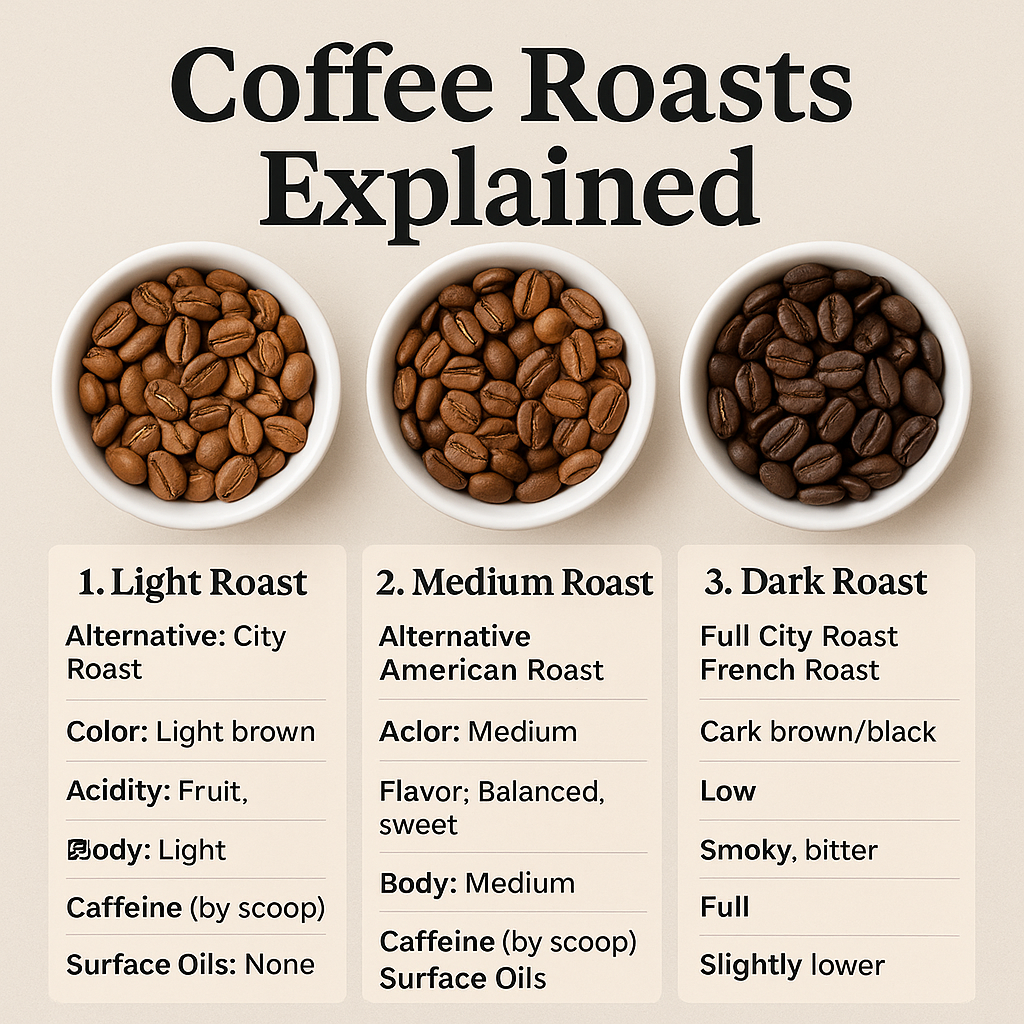
You’ve seen them on coffee bags and menus: light roast, medium roast, dark roast. But what do these labels really mean? And how do they affect the taste of your coffee?
In this article, you’ll learn how roasting levels influence flavor, aroma, acidity, body, and caffeine content — so you can choose the perfect roast for your taste.
What Is a Coffee Roast?
Roasting is the process of transforming green coffee beans into the aromatic, flavorful beans we grind and brew. It involves:
- High temperatures (350°F to 480°F / 175°C to 250°C)
- Carefully timed heat application
- Chemical changes (Maillard reaction, caramelization)
The roast level is determined by how long the beans are roasted and at what temperature.
The 3 Main Roast Levels
1. Light Roast
Also called:
- Cinnamon Roast
- Light City
- Half City
Color: Light brown
Surface: Dry (no oils visible)
Internal temp: Around 356–401°F (180–205°C)
Crack point: Roasted just after the first crack
Flavor Profile:
- Bright, acidic
- Fruity, floral, tea-like
- Clear expression of origin (terroir)
Best For:
- Pour-over
- AeroPress
- Single-origin coffees
Myth: Light roast does not have less caffeine. In fact, it often has slightly more by weight, due to less bean expansion during roasting.
2. Medium Roast
Also called:
- City Roast
- American Roast
- Breakfast Roast
Color: Medium brown
Surface: Still dry
Internal temp: 410–428°F (210–220°C)
Crack point: Between first and second crack
Flavor Profile:
- Balanced acidity and body
- Notes of caramel, chocolate, nuttiness
- Some origin flavor, some roast flavor
Best For:
- Drip coffee
- French press
- General crowd-pleasing coffee
This is the most popular roast in the U.S. and many parts of the world.
3. Dark Roast
Also called:
- Full City Roast
- French Roast
- Espresso Roast
- Italian Roast
Color: Dark brown to almost black
Surface: Oily sheen from bean surface oils
Internal temp: 437–482°F (225–250°C)
Crack point: After second crack
Flavor Profile:
- Low acidity
- Bold, smoky, bitter
- Roast-forward flavor (less origin character)
Best For:
- Espresso
- Moka pot
- Lovers of bold, intense brews
Myth: Dark roast doesn’t necessarily have more caffeine — it often has less by volume (due to bean expansion), but the difference is minor.
Comparing Roast Levels
| Attribute | Light Roast | Medium Roast | Dark Roast |
|---|---|---|---|
| Color | Light brown | Medium brown | Dark brown/black |
| Acidity | High | Medium | Low |
| Flavor | Fruity, floral | Balanced, sweet | Smoky, bitter |
| Body | Light | Medium | Full |
| Caffeine (by scoop) | Slightly higher | Balanced | Slightly lower |
| Surface Oils | None | None | Oily sheen |
How to Choose the Right Roast
Choose light roast if:
- You enjoy bright, tea-like coffee
- You want to taste the origin characteristics (e.g., Ethiopian floral notes)
Choose medium roast if:
- You want balance and sweetness
- You’re brewing drip or French press
Choose dark roast if:
- You love bold, smoky flavors
- You enjoy espresso, cream, or milk-based drinks
Roasting and Brewing Tips
- Freshness matters: Coffee is best within 2–4 weeks of roasting
- Store beans properly: In an airtight, opaque container away from light and heat
- Grind appropriately: Coarser for light roasts, finer for dark roasts can help with extraction
- Adjust your brew: Dark roasts extract faster — reduce time or water temp to avoid bitterness
Final Sip: Your Roast, Your Rules
There’s no “best” roast — just what’s best for you. Whether you crave the brightness of a light roast, the balance of medium, or the boldness of dark, understanding roast levels helps you brew coffee you love, every time.
Explore, taste, and take notes. Because the more you learn about roast profiles, the more delicious your daily cup becomes.