
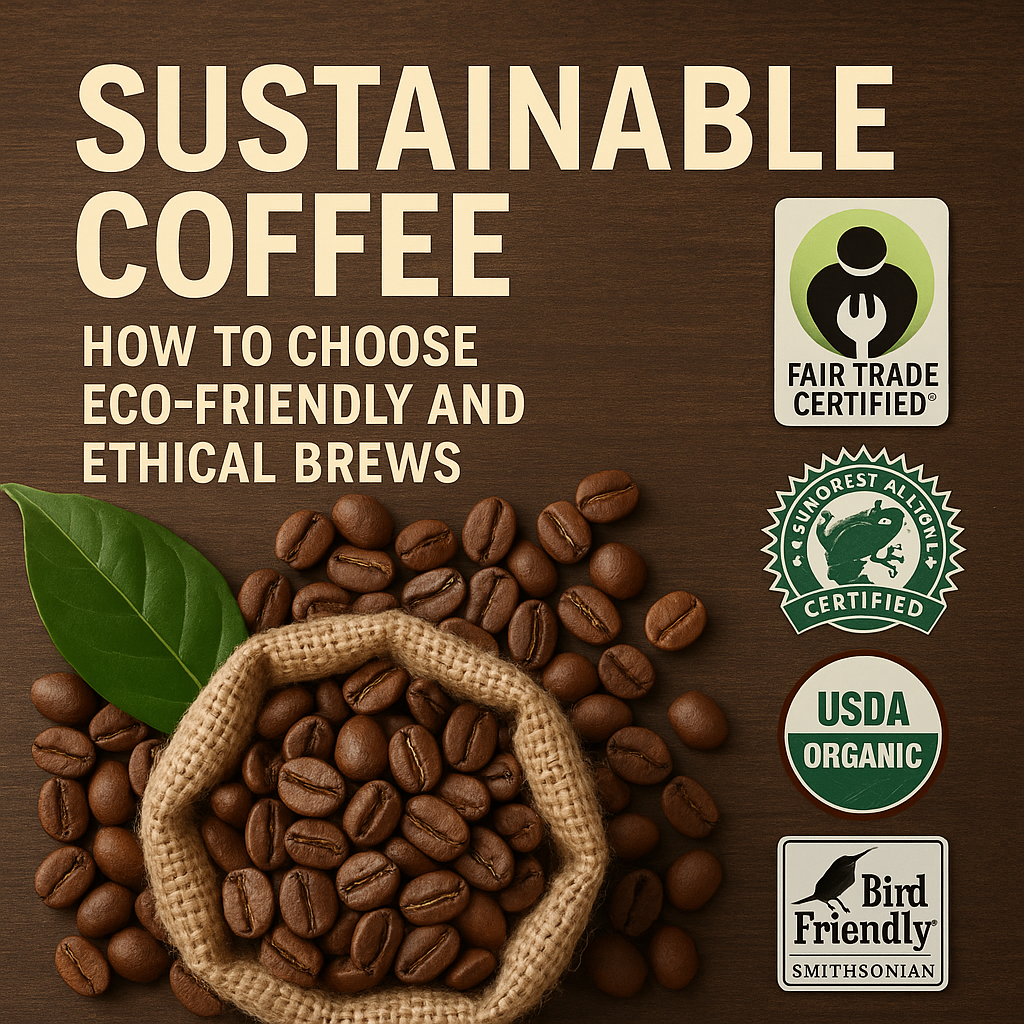
Your daily cup of coffee may seem simple, but behind every bean is a complex global system — one that impacts farmers, ecosystems, and communities. Fortunately, as consumers, we have the power to make better choices.
In this article, you’ll learn how to identify sustainable coffee, what certifications matter, and how to make your coffee habit more ethical and environmentally friendly.
Why Sustainability in Coffee Matters
Coffee production involves:
- Millions of small farmers
- Large amounts of water and land
- Carbon emissions from processing and shipping
Unsustainable practices can lead to:
- Deforestation
- Soil degradation
- Worker exploitation
- Loss of biodiversity
Choosing sustainable coffee helps support people and the planet — without giving up great flavor.
1. Understand Sustainable Coffee Certifications
Several certifications can guide your purchasing choices. Here’s what the most common ones mean:
Fair Trade Certified
- Guarantees minimum prices to farmers
- Supports worker rights and safe conditions
- Often includes community investment funds
Rainforest Alliance Certified
- Focuses on environmental protection
- Encourages shade-grown coffee to preserve biodiversity
- Promotes fair working conditions and sustainable farming
USDA Organic
- Grown without synthetic fertilizers or pesticides
- Requires crop rotation, composting, and other natural practices
- Often combined with other certifications
Bird Friendly (Smithsonian Certified)
- Ensures coffee is grown under a diverse, natural forest canopy
- Protects migratory bird habitats
- Requires organic certification first
Direct Trade (Not a certification, but a model)
- Coffee roasters build direct relationships with farmers
- Emphasizes transparency, quality, and higher farmer pay
- Often higher-priced and traceable to the farm
2. Choose Shade-Grown Coffee
Traditional coffee was grown under shade trees — but many modern plantations clear forests for sun-grown, industrial-scale production.
Shade-grown coffee:
- Preserves wildlife habitats
- Reduces need for pesticides
- Promotes better soil and water health
Look for labels or ask roasters about their farming practices.
3. Support Small Roasters and Ethical Brands
Many small-batch or specialty roasters are deeply invested in sustainability. Look for companies that:
- Publish transparency reports
- Source directly from farms
- Use compostable or recyclable packaging
- Offset carbon emissions
Some brands to explore include:
- Counter Culture
- Onyx Coffee Lab
- Blue Bottle (some locations)
- Colectivo Coffee
- Local roasters in your area
4. Buy Whole Bean and Brew at Home
Brewing at home is not only more affordable — it’s also more sustainable than frequent café visits with disposable cups.
Tips:
- Buy whole bean in bulk to reduce packaging
- Use a reusable coffee filter (like stainless steel or cloth)
- Avoid single-use pods, unless compostable
- Store beans in airtight containers to reduce waste
5. Reduce Coffee Waste
Make your routine greener with these tips:
- Compost coffee grounds (great for gardens)
- Reuse grounds for cleaning or deodorizing
- Drink from a reusable mug
- Use energy-efficient kettles or brewers
- Make cold brew in batches to reduce daily energy use
6. Consider Carbon Footprint and Transport
Coffee often travels thousands of miles to reach your cup. While that’s unavoidable for most of us, you can:
- Support regional roasters to reduce secondary transport emissions
- Choose ocean-shipped beans over air-freighted (ask your roaster)
- Offset your own footprint through reforestation programs
7. Ask the Right Questions
When buying coffee, ask:
- Where was this coffee grown?
- How were the farmers compensated?
- What farming methods were used?
- Is this coffee certified, and by whom?
- How does the roaster reduce environmental impact?
Even if the answers aren’t perfect, asking raises awareness — and helps push the industry forward.
Final Sip: Every Cup Is a Choice
Coffee is more than a drink — it’s a global ecosystem. With each purchase, you’re either supporting sustainable systems or fueling harmful ones.
By choosing certified, shade-grown, fairly traded, or direct-sourced coffee, you’re making a small but meaningful difference. And when millions of people make better choices, change happens.
Drink consciously. Support farmers. Protect the planet — one cup at a time.