
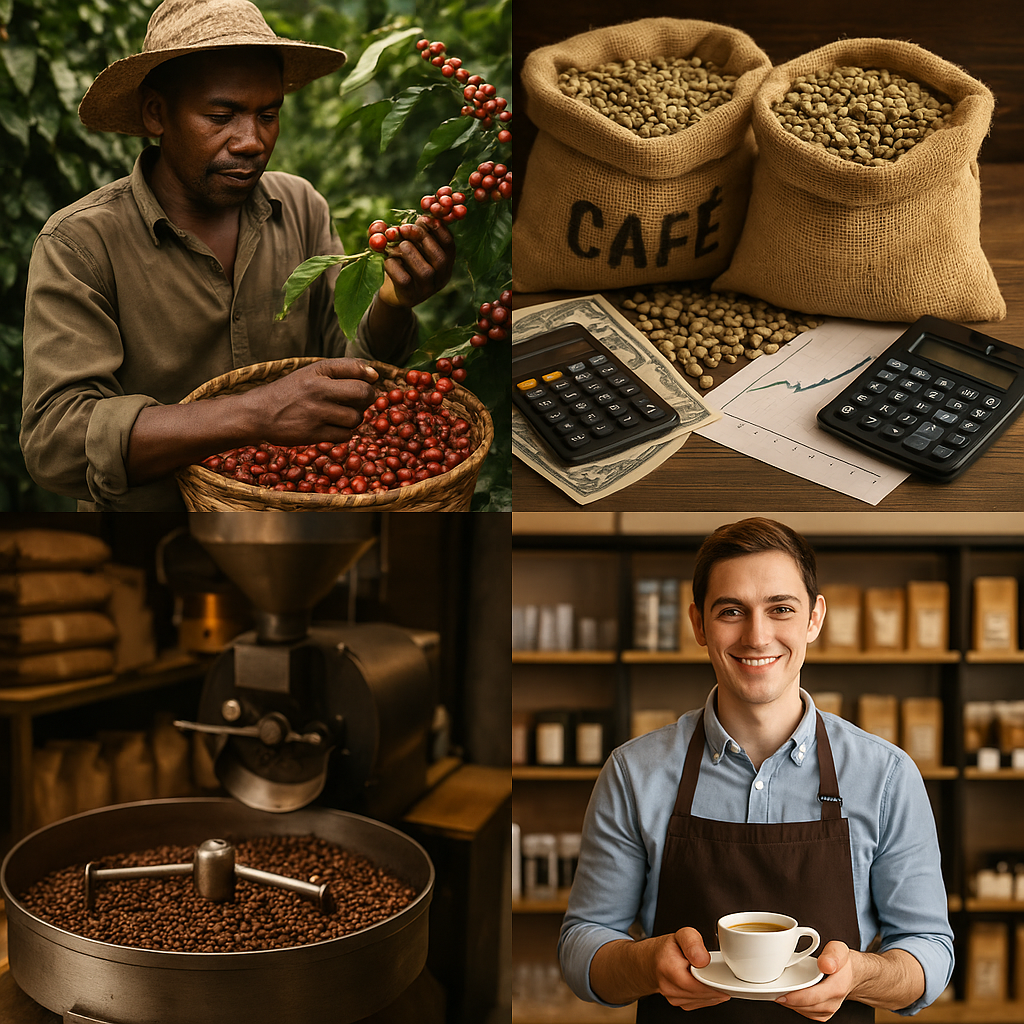
Coffee isn’t just a morning ritual — it’s one of the most globally traded commodities, supporting millions of farmers, shaping economies, and driving environmental change. In this article, we’ll explore the economics behind coffee: how prices are set, who gets what share of profits, and what you can do to influence fairness and sustainability.
The Coffee Supply Chain: From Farm to Cup
Here’s a simplified breakdown:
- Farmers / Cooperatives: They grow, harvest, and process coffee cherries.
- Middlemen / Local Traders: Buy processed coffee from farmers, often sorting quality.
- Exporters / Importers: Transport coffee across borders.
- Roasters: Buy green beans, roast them, package them.
- Retailers / Cafés: Sell brewed or packaged coffee to final consumers.
At each stage, costs, risks, and profits are added. Farmers often face the lowest margins, despite doing the hardest work.
How Coffee Prices Are Set
Key influences on coffee pricing:
- Global markets: The C‑price (for New York Arabica futures) often sets a benchmark for international trade.
- Supply and demand: Production fluctuations due to weather, disease (e.g. rust), or pests affect supply.
- Quality premiums: Specialty or high-grade lots can fetch much higher per-pound prices.
- Cost of production: Inputs like labor, fertilizers, processing, and transport influence minimum viable prices.
- Exchange rates and tariffs: Import and export duties and local currency fluctuations impact margins.
Because coffee is a commodity, many producers must accept volatile prices that may fall below their cost of production — a challenging reality.
Who Earns What?
A rough illustration (varies by origin and model):
- Farmer: 10–20 %
- Local trader / cooperative: 5–10 %
- Exporter / importer: 5–10 %
- Roaster: 15–25 %
- Retail café / retailer: 30–50 %
These percentages shift hugely depending on whether it’s mass-grade coffee, specialty coffee, or direct-trade models.
The Problems and Risks for Farmers
Farmers face:
- Low, volatile prices: Sometimes below the cost of production
- High input costs: Fertilizers, labor, machinery
- Climate and disease risks: Drought, pests, coffee leaf rust
- Market access barriers: Lack of infrastructure, middlemen taking profits
- Lack of bargaining power: Small farms with limited scale
How Specialty / Direct Trade Changes the Dynamic
Specialty coffee models try to shift the balance:
- Direct trade: Roasters buy from farmers/cooperatives, bypassing many middlemen
- Transparency: Farmers often receive full disclosure of sale prices and costs
- Higher premiums: Better quality beans receive significantly better payments
- Long-term partnerships: Roasters invest in farm improvements, training, infrastructure
- Shared risk: When yields are low or costs rise, some contracts absorb or mitigate risk
How Consumers Can Influence the Economics
Your choices matter. You can support fairness by:
- Buying from transparent, ethical roasters
- Choosing single-origin or direct-trade coffees
- Paying a premium for quality and sustainability
- Supporting certifications (Fair Trade, Rainforest Alliance) or cooperatives
- Reducing waste so roasters and retailers can pay more to producers
The Future: Sustainability and Equity in Coffee Economics
Emerging trends:
- Climate adaptation funding: Supporting farmers to adapt to changing conditions
- Gender equity programs: Ensuring women farmers are fairly compensated
- Agroforestry and regenerative farming: Improving ecosystems while growing coffee
- Blockchain and traceability tech: Tracking beans from farm to cup
- Consumer education: Helping buyers understand the true value behind coffee