
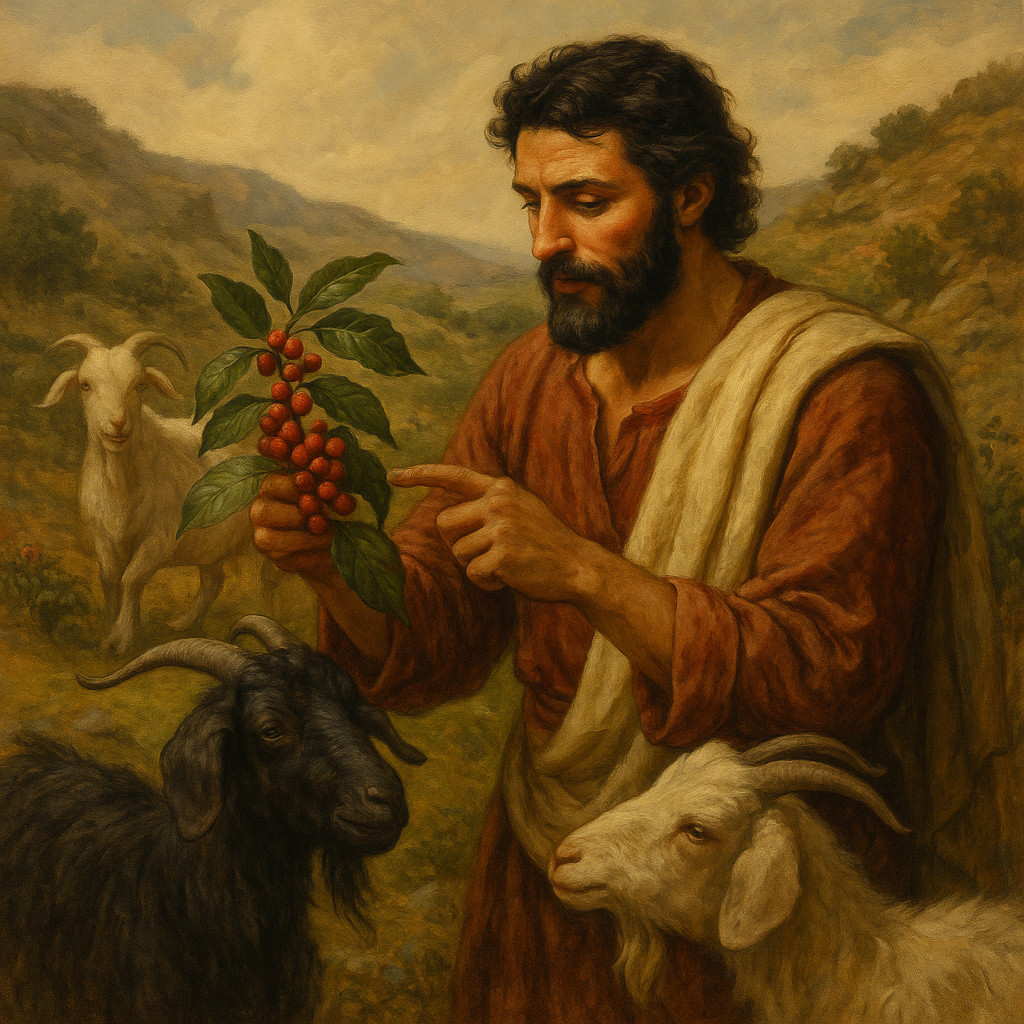
Coffee is such a normal part of daily life that it’s easy to forget its origins are wrapped in mystery, folklore, and tradition. While historians debate the exact beginnings of coffee consumption, one of the most popular and charming tales centers on a goat herder named Kaldi from Ethiopia. This legend has been passed down through generations and continues to captivate coffee lovers around the world.
Let’s dive into the story of how coffee was discovered — or at least how it’s believed to have been — and explore the cultural impact of this humble bean.
The Legend of Kaldi: A Goat Herder’s Discovery
According to ancient Ethiopian folklore, the discovery of coffee dates back to around the 9th century. Kaldi, a young goat herder in the region of Kaffa (from where the word “coffee” is believed to have originated), noticed something unusual about his goats.
After eating bright red berries from a certain bush, the goats became incredibly energetic. They would jump around, bleat loudly, and refuse to sleep at night. Intrigued by their behavior, Kaldi decided to try the berries himself.
Soon, he too felt a surge of energy and excitement. Delighted by his discovery, Kaldi gathered some berries and took them to a nearby monastery.
The Monks and the Magic Berries
When Kaldi presented the mysterious berries to the monks, they were skeptical. Some stories say the berries were thrown into the fire, only to release an aromatic smell that drew attention. Curious, the monks retrieved the roasted beans from the embers, ground them, and mixed them with hot water — creating what is believed to be the world’s first cup of coffee.
Upon drinking the brew, the monks realized it helped them stay awake and alert during long hours of evening prayer and meditation. From there, the knowledge of the energizing drink began to spread.
From Myth to Movement
While this story is more legend than documented history, it reflects a truth about how important coffee became in spiritual and social life. The drink made its way from Ethiopia to Yemen, where Sufi mystics used it for the same purpose — staying alert during nighttime devotions.
This movement helped coffee gain a foothold in religious and cultural communities long before it became a commercial product.
Why the Legend Still Matters
Even though the story of Kaldi may not be historically verified, it continues to be celebrated in books, cafés, documentaries, and branding. It’s a story of curiosity, nature, and discovery — three themes that resonate strongly with coffee culture.
Some cafés even name their businesses “Kaldi’s Coffee” or use goats in their branding to honor this tale. The legend adds a personal, almost magical origin to a drink that now fuels billions of people each day.
Coffee in Early Ethiopian Culture
Whether Kaldi was real or not, Ethiopia is undeniably the birthplace of coffee. Wild coffee trees still grow in the forests of the Kaffa region, and coffee ceremonies remain an essential part of Ethiopian culture today.
These ceremonies are elaborate social rituals where green coffee beans are roasted in front of guests, ground, and brewed — typically in a clay pot called a jebena. The experience is not just about drinking coffee; it’s about hospitality, connection, and respect.
From Ethiopia to the World
After gaining popularity in Ethiopia and Yemen, coffee began its journey around the world:
- Arabian Peninsula: By the 15th century, coffee was cultivated in Yemen and became central to Islamic culture.
- Ottoman Empire: Coffeehouses flourished in cities like Istanbul, becoming places of intellectual and social exchange.
- Europe: Coffee reached Italy in the 17th century and quickly spread throughout the continent.
- The Americas: European colonists brought coffee plants to Central and South America, creating the world’s largest coffee-growing regions.
All of this global movement can be traced — if only symbolically — back to Kaldi’s goats on a hillside.
The Power of Story in Coffee Culture
Coffee isn’t just a drink. It’s an experience, a ritual, and for many, a passion. Stories like Kaldi’s add depth and personality to that passion. They connect people to the long, rich history of the bean and the countless hands that brought it to their cup.
Even in modern specialty cafés, the storytelling aspect is powerful. Baristas talk about the farm the beans came from, the altitude at which they were grown, the processing method used. That tradition of storytelling arguably began with Kaldi.
Lessons from the Legend
- Curiosity leads to discovery: Kaldi didn’t ignore the behavior of his goats. He paid attention, explored, and shared what he found.
- Nature holds hidden treasures: A plant that was once wild and overlooked became the basis of a global industry.
- Simple moments can spark global change: One person’s observation led to the development of an entire culture around coffee.
Final Sip: Remembering the Roots
Next time you take a sip of your favorite brew, think of Kaldi — the curious goat herder who, legend says, changed the world by paying attention to his goats. Whether myth or truth, his story reminds us of how something small and natural can evolve into a global force.
The tale of Kaldi isn’t just about coffee. It’s about wonder, connection, and how humanity finds meaning even in the most ordinary things.