
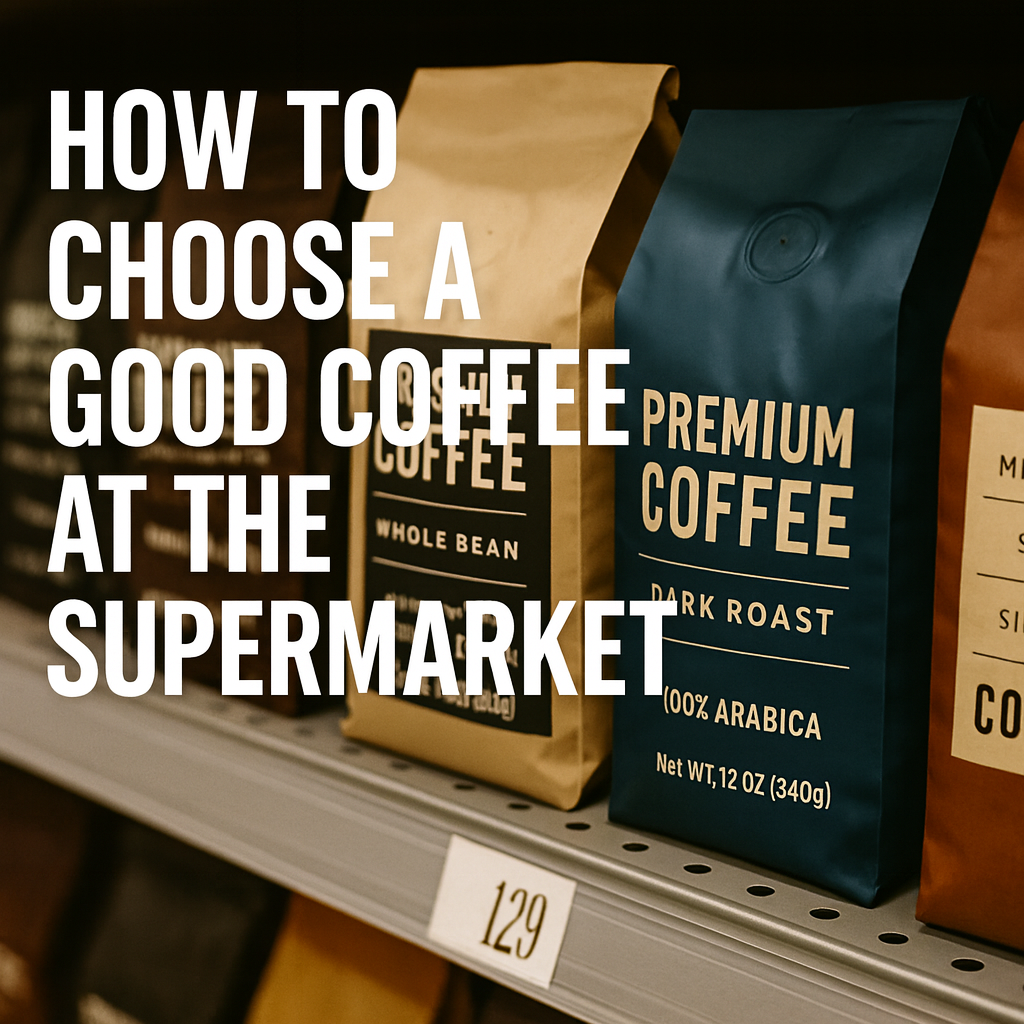
With so many coffee options lining the shelves — from flashy packaging to buzzwords like “100% Arabica,” “gourmet,” or “medium roast” — choosing a good coffee at the supermarket can feel overwhelming. But behind the labels and brands, there are key indicators that can help you identify quality and pick a coffee that actually suits your taste and brewing style.
In this article, you’ll learn how to read coffee labels, avoid common traps, and make informed decisions the next time you shop for your next bag of beans.
1. Whole Beans vs. Ground Coffee
One of the first choices you’ll encounter is whole bean vs. pre-ground coffee.
Whole Bean:
- Pros: Fresher, more flavor, longer shelf life.
- Cons: Requires a grinder.
- Best for: Coffee lovers who want the freshest experience and control over grind size.
Ground Coffee:
- Pros: Convenient, no grinder needed.
- Cons: Loses freshness faster, one-size-fits-all grind might not suit your brew method.
- Best for: Busy people, beginners, or those without equipment.
Pro Tip: If freshness is your priority, go with whole beans and grind just before brewing.
2. Roast Date Matters (More Than “Best Before”)
Many supermarket coffees only show a “best before” date, which can be misleading. Ideally, you want coffee that was roasted recently, within the last 2 to 6 weeks.
Look for bags that clearly state the roast date, not just the expiration. Fresher beans yield better aroma and flavor.
Avoid: Coffee with no roast date, or coffee that’s close to or past its “best before” window.
3. Understand Roast Levels: Light, Medium, Dark
Different roast levels affect the flavor, aroma, and strength of the coffee:
- Light Roast: Retains more of the bean’s original flavor. Fruity, acidic, and complex.
- Medium Roast: Balanced, sweet, and versatile. The most popular and user-friendly.
- Dark Roast: Bold, smoky, less acidic, often bitter. Great for milk-based drinks.
Pro Tip: Try medium roast if you’re unsure. It offers a nice balance for most brewing methods.
4. 100% Arabica vs. Robusta Blends
Many coffee bags will highlight “100% Arabica” on the label. That’s generally a good thing — Arabica beans are known for smoother, sweeter flavor.
Robusta, while cheaper and more caffeinated, is more bitter and harsh. Some brands blend Robusta for cost savings or to increase crema in espresso blends.
- For high-quality flavor: go for 100% Arabica
- For stronger caffeine or cheaper options: blends with Robusta can work
5. Country of Origin (and Region)
Great coffee brands often specify not just the country, but even the region or farm where the beans come from.
For example:
- Ethiopia – Yirgacheffe = floral and citrusy
- Colombia – Huila = fruity and balanced
- Brazil – Cerrado = nutty and chocolatey
The more specific the origin, the more likely it is a specialty-grade or well-sourced coffee.
Avoid: Bags that just say “Blend” or “International Origin” with no detail — these usually contain low-quality beans.
6. Certifications: What Do They Mean?
You’ll see several logos and certifications on supermarket coffee:
- Fair Trade: Ensures ethical treatment and fair pay for farmers.
- Organic: No synthetic pesticides or chemicals used.
- Rainforest Alliance: Promotes environmental and social responsibility.
- UTZ Certified: Focuses on sustainable farming practices.
While not always a guarantee of flavor, these labels often indicate better sourcing practices.
7. Packaging: What to Look For
Good packaging helps preserve freshness. Look for:
- Valve Bags: A one-way valve lets gases escape but keeps air out.
- Opaque, Foil-Lined Bags: Prevents light and moisture from ruining the beans.
- Zip Closure: Allows you to reseal the bag to retain freshness.
Avoid: Clear plastic bags, or bags stored in open bins.
8. Grind Size Matters (If Buying Pre-Ground)
Coffee grind affects how the water extracts flavor. If you’re buying pre-ground coffee, make sure the grind matches your brewing method:
- Coarse: For French press, cold brew
- Medium: For drip machines, pour over
- Fine: For espresso, moka pot
- Extra fine: For Turkish coffee
Pro Tip: If the bag doesn’t mention grind size, it’s usually a medium grind — suitable for drip coffee, but not for all brew methods.
9. Watch Out for Flavor Additives
Some supermarket coffees come with added “flavors” like vanilla, hazelnut, or caramel. While tempting, these usually cover up low-quality beans.
If you like flavored coffee, make sure it’s from a reputable brand and not overpowering. Otherwise, stick to unflavored coffee to enjoy the bean’s natural taste.
10. Price vs. Quality: What’s Worth Paying For?
You don’t need to buy the most expensive bag, but extremely cheap coffee often means poor-quality beans, over-roasting, or stale inventory.
Look for mid-range pricing with transparent sourcing, fresh roast dates, and clear flavor descriptions.
A good supermarket coffee might cost a bit more, but the jump in quality is often well worth it.
Final Tips Before You Buy
- Try local roasters if your supermarket stocks them — they’re usually fresher and higher quality.
- Buy in small amounts (250g or 12oz bags) to keep your coffee fresh.
- Experiment with different origins, roast levels, and brewing methods until you find your perfect match.
Final Sip: Becoming a Smarter Coffee Shopper
You don’t have to be a barista to choose great coffee at the supermarket — you just need to know what to look for. By reading the label, checking the roast date, and understanding basic coffee types and packaging, you’ll get closer to a consistently enjoyable brew.
Great coffee starts with great beans — and smart buying starts with a bit of knowledge. Now you’ve got both.