
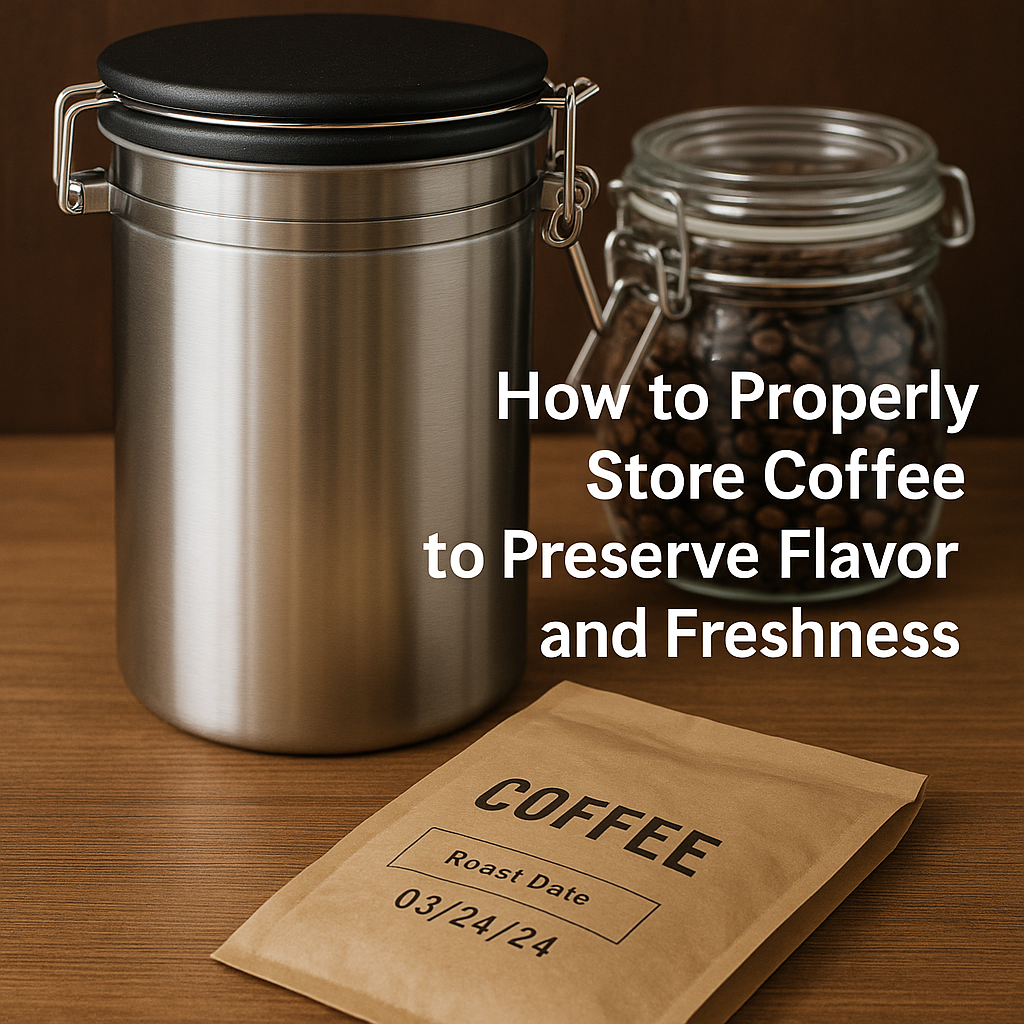
You’ve just bought a great bag of coffee — maybe even whole beans from a single-origin roast. But if you don’t store it correctly, all those delicate aromas and flavors can quickly fade. Oxygen, light, heat, and moisture are the enemies of fresh coffee, and poor storage can turn a great cup into a bland brew.
In this article, you’ll learn how to store coffee properly to maintain its quality for as long as possible — whether you’re working with beans or pre-ground coffee.
Why Proper Storage Matters
Coffee is a perishable product, especially after roasting. As soon as it’s exposed to air, the clock starts ticking. The oils and volatile compounds responsible for aroma and flavor begin to break down, and the coffee stales.
Main threats to coffee freshness:
- Oxygen: Causes oxidation and staling.
- Light: Destroys flavor compounds.
- Heat: Speeds up chemical breakdown.
- Moisture: Leads to mold or uneven extraction.
If you want your coffee to taste as good on day 15 as it did on day 1, how you store it makes a big difference.
Whole Beans vs. Ground Coffee: What’s Easier to Store?
Whole beans stay fresh significantly longer than ground coffee. Once coffee is ground, it has far more surface area exposed to air — which means faster oxidation.
Shelf life comparison (approximate):
- Whole beans: 3 to 4 weeks (after roast, stored properly)
- Ground coffee: 1 to 2 weeks
Pro tip: Grind your beans right before brewing. If you can’t, buy in small amounts and store tightly.
1. Use an Airtight, Opaque Container
The best way to store coffee is in an airtight, light-proof container.
Ideal containers:
- Stainless steel coffee canisters
- Opaque ceramic jars with rubber seals
- Specialty vacuum-sealed containers (e.g., Fellow Atmos)
Avoid:
- Clear containers (even if airtight)
- Containers that are opened frequently without resealing tightly
2. Keep It in a Cool, Dark Place
Light and heat are enemies of coffee. Store your container in a cool, dark cabinet, away from:
- Stoves or ovens
- Windows
- Dishwashers (which release steam and heat)
Don’t leave your coffee on the counter just because it looks pretty — it’s degrading faster under direct light and fluctuating temperatures.
3. Don’t Refrigerate Your Coffee
This is a common mistake.
The refrigerator is too humid, and coffee easily absorbs odors (like onions, garlic, etc.). Even in a sealed container, the moisture can negatively affect the beans.
Why it’s a bad idea:
- Condensation forms each time you remove it
- Humid air damages the coffee’s oils
- Odors contaminate the flavor
Only consider refrigeration if the coffee is vacuum-sealed and you live in an extremely hot climate without air conditioning.
4. Freezing Coffee: Yes, But Do It Right
Freezing can be effective if done properly — especially for long-term storage. The key is avoiding moisture and temperature fluctuations.
How to freeze coffee:
- Use a vacuum-sealed or double-layered airtight bag
- Freeze in small portions (only what you’ll use in a week)
- Don’t refreeze once opened
- Let the beans come to room temperature before opening the bag (to avoid condensation)
This works best for whole beans. Never freeze ground coffee unless absolutely necessary.
5. Don’t Store Coffee in the Original Bag (Unless It’s Designed for It)
Most supermarket coffee comes in basic packaging — not ideal for long-term freshness.
Exceptions:
- Specialty bags with one-way valves, resealable zip closures, and foil lining
If your bag doesn’t seal tightly or let air out, transfer the beans to a proper container after opening.
6. Buy Less, More Often
It’s tempting to buy large bags of coffee to save money, but freshness will suffer. Instead, buy in smaller quantities — enough to last about 1–2 weeks.
Many specialty roasters sell 250g (8.8 oz) bags, which are ideal for personal consumption.
Bonus tip:
If you find a coffee you love, buy two bags: one for immediate use and one to freeze for later (if stored properly).
7. Label Your Coffee with the Roast Date
When you open a bag, write the roast date and open date on it (if not already printed). This helps you track freshness and avoid using stale coffee unknowingly.
Coffee doesn’t “go bad” like milk, but its taste will degrade significantly after a few weeks.
Signs Your Coffee Has Gone Stale
- Dull or flat aroma
- Bitter, harsh, or “burnt” taste
- Lack of complexity or flavor notes
- Coffee brews weaker or feels lifeless in the cup
If your brew doesn’t taste like it used to, it may not be your equipment — it might just be stale beans.
Final Sip: Keep It Fresh, Keep It Tasty
Great coffee isn’t just about beans or brewing — it’s also about storage. A little care goes a long way in preserving flavor and getting the most out of every cup.
To recap:
- Use airtight, light-proof containers
- Store in a cool, dry place — not the fridge
- Avoid buying in bulk unless you can freeze it properly
- Grind only what you need
Think of your coffee like a fine spice or fresh fruit — the fresher it is, the more it rewards you in flavor.