
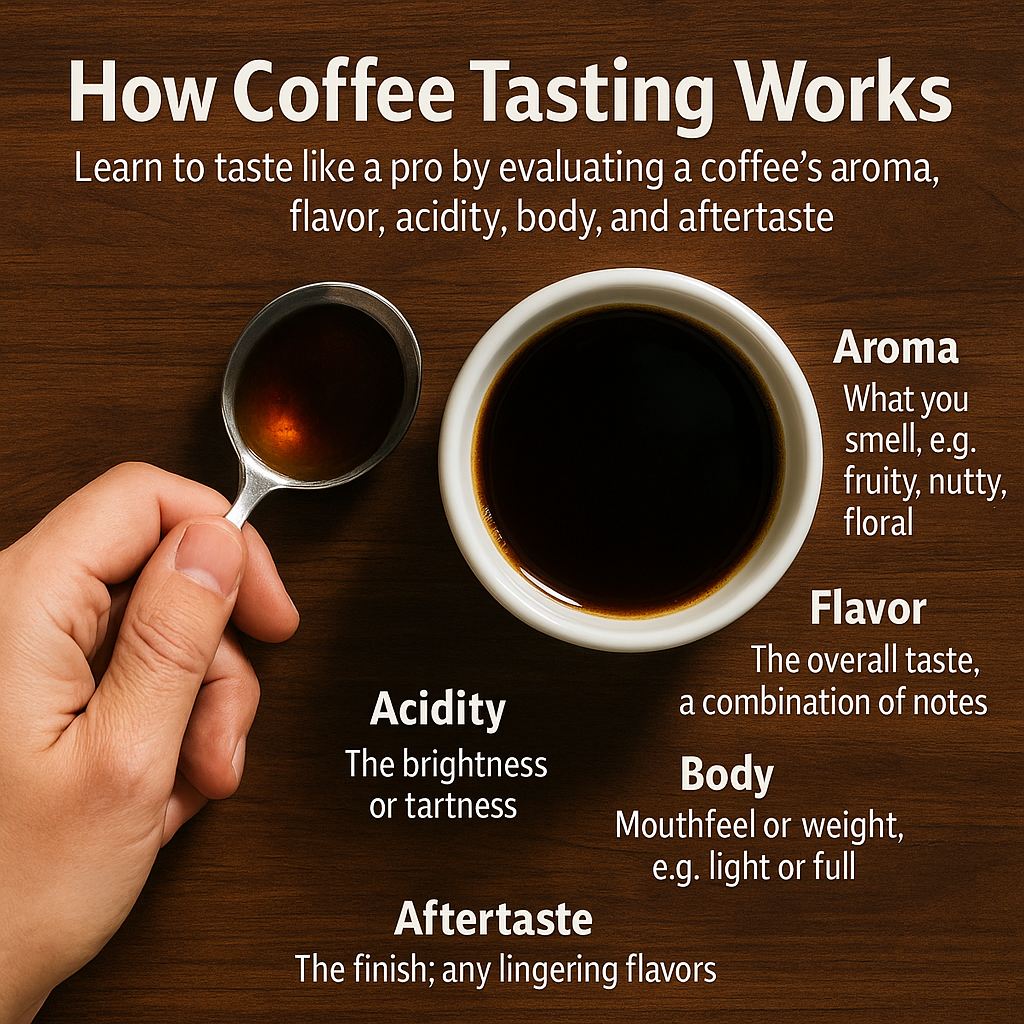
Tasting coffee goes far beyond identifying whether it’s “strong” or “bitter.” Like wine or chocolate, coffee offers a rich spectrum of aromas, flavors, textures, and aftertastes. Learning how to properly taste coffee — often referred to as “cupping” — opens the door to a deeper appreciation of every sip.
In this article, you’ll learn the fundamentals of coffee tasting, how to train your palate, and what professional tasters look for when evaluating a cup.
What Is Coffee Tasting (Cupping)?
Cupping is the standard method used by coffee professionals to evaluate a coffee’s flavor profile, quality, and defects. It involves brewing coffee in a consistent way and assessing aroma, flavor, acidity, body, and aftertaste.
But you don’t need a lab or fancy tools to taste like a pro. With just a bit of focus and practice, you can start identifying subtle notes in your daily cup.
Why Learn to Taste Coffee?
- Discover what you actually enjoy in a cup
- Choose beans that suit your preferences
- Appreciate the differences between origins and roasts
- Understand why one coffee feels “bright and juicy” while another is “smooth and chocolatey”
- Identify freshness, roast quality, or brewing mistakes
The Five Core Elements of Coffee Tasting
1. Aroma
What do you smell when you first grind the beans or brew the coffee?
Common notes include floral, fruity, nutty, earthy, spicy, or chocolate.
2. Flavor
The overall impression of the coffee’s taste — a combination of aroma, acidity, and sweetness.
3. Acidity
Not to be confused with sourness, acidity gives coffee its liveliness. It can be crisp like green apple, juicy like orange, or mellow like plum.
4. Body
The texture or weight of the coffee in your mouth. Is it light like tea, creamy like milk, or thick like syrup?
5. Aftertaste (Finish)
What lingers after you swallow? Some coffees leave a sweet, clean finish. Others may be dry or bitter.
How to Taste Coffee Step by Step
You can taste coffee professionally or casually. Here’s a simplified version of cupping you can try at home.
Step 1: Brew It Right
Use freshly ground coffee with a consistent brew method. A pour-over or French press works well for tasting, but you can even use a basic drip machine.
Step 2: Smell the Grounds (Dry Aroma)
Before brewing, smell the dry coffee grounds. What do you notice?
Step 3: Smell the Brewed Coffee (Wet Aroma)
Right after brewing, smell the wet coffee. Compare it to the dry aroma — some notes change!
Step 4: Take a Sip — Loudly
Slurp the coffee (yes, slurp!). This spreads the coffee evenly across your palate and helps you catch subtle flavors.
Step 5: Evaluate the Taste
Ask yourself:
- Is it bright or dull?
- Sweet or bitter?
- Fruity or earthy?
- Light or full-bodied?
Step 6: Reflect on the Finish
Pay attention to how the flavor fades. Is there a lingering sweetness or a dry, papery finish?
Use a Flavor Wheel to Explore Notes
The Specialty Coffee Association (SCA) flavor wheel is a powerful tool. It includes categories like:
- Fruity (berries, citrus, stone fruit)
- Floral (jasmine, rose, chamomile)
- Sweet (honey, caramel, brown sugar)
- Nutty (almond, hazelnut, peanut)
- Spices (cinnamon, clove)
- Other (earthy, smokey, rubbery for defects)
The more you practice, the more specific your observations become.
How Roast Level Affects Taste
- Light Roast: More acidity, floral and fruity notes, origin flavor is prominent
- Medium Roast: Balanced, caramel and nutty notes, mild acidity
- Dark Roast: Low acidity, bold and bitter flavors, roast dominates origin taste
Your favorite roast level will greatly influence what you detect in a cup.
Practice Makes Better (Not Perfect)
Here’s how to improve your tasting skills:
- Taste two coffees side by side — compare the difference
- Keep a coffee journal with tasting notes
- Try the same coffee with different brew methods
- Taste at different temperatures (flavors change as the coffee cools)
- Taste coffee with food — chocolate, fruit, nuts — and compare flavor overlaps
Common Flavor Descriptors to Start With
If you’re new to tasting, start with simple terms:
- Sweet
- Fruity
- Nutty
- Chocolatey
- Bitter
- Sour
- Smooth
- Bright
- Dry
- Spicy
Over time, you can get more specific (e.g., raspberry vs. generic “fruity”).
Final Sip: Trust Your Tongue
Tasting coffee is personal. There’s no “wrong” answer — just different palates, preferences, and perceptions. The key is to slow down, pay attention, and enjoy the process.
As you practice, you’ll start to recognize flavors, prefer certain origins or roasts, and even detect defects like staleness or under-roasting. Your daily cup becomes more than just caffeine — it becomes a conversation with the bean.
So next time you brew, pause and taste. The journey starts with one sip.