
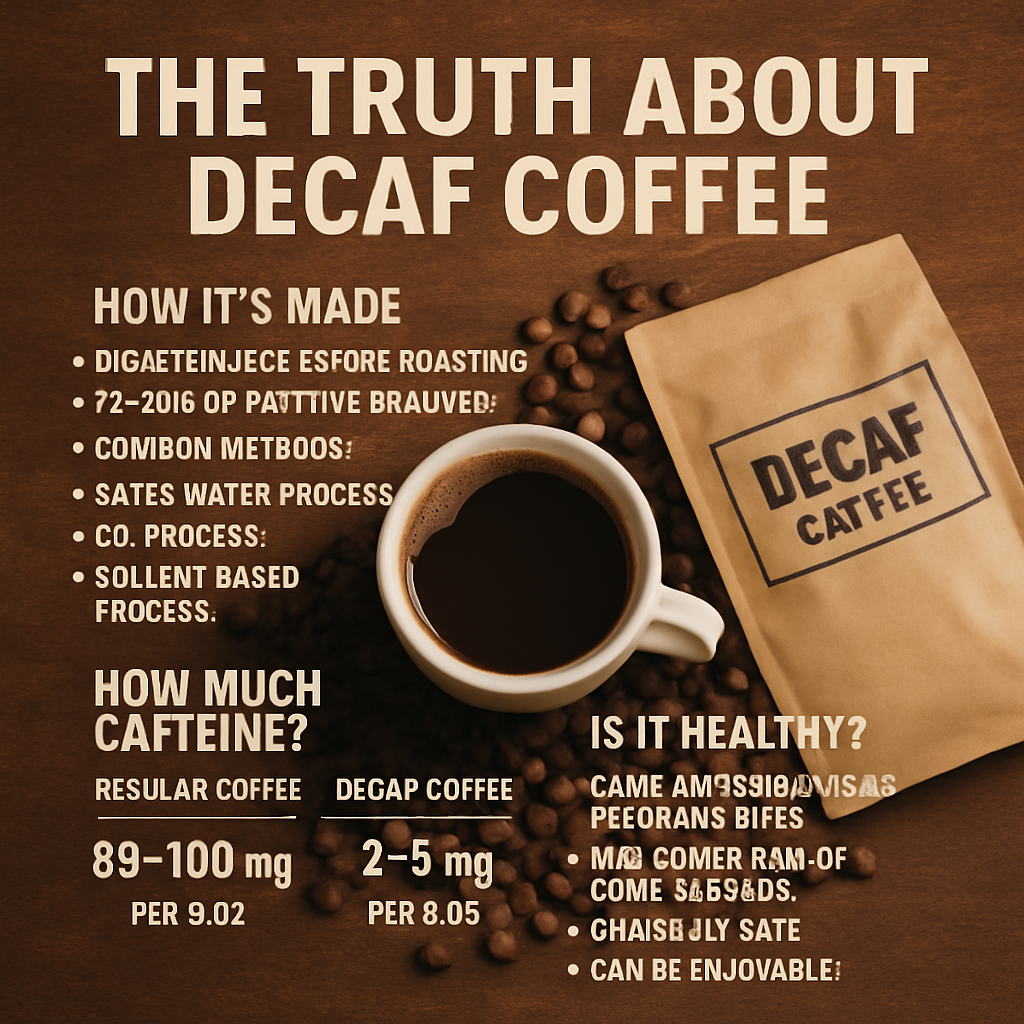
Decaf coffee often gets a bad reputation — some say it tastes bland, others believe it’s not “real” coffee. But decaf has come a long way, and for many people, it’s a great way to enjoy the flavor of coffee without the buzz.
In this article, we’ll explain how decaf coffee is made, how much caffeine it actually contains, whether it’s healthy, and how to find great-tasting decaf options that don’t compromise on flavor.
What Is Decaf Coffee?
Decaf (short for decaffeinated) coffee is made from regular coffee beans that have had most of their caffeine removed. While it’s not 100% caffeine-free, decaf typically contains 97–99% less caffeine than its regular counterpart.
A standard 8 oz cup of regular coffee has 80–100mg of caffeine.
The same cup of decaf usually contains 2–5mg.
Why Drink Decaf?
People choose decaf for many reasons:
- Caffeine sensitivity
- Avoiding sleep disruption
- Pregnancy or health conditions
- Anxiety or heart issues
- Simply wanting to enjoy coffee later in the day
For those who love the taste of coffee but not the side effects of caffeine, decaf can be the perfect solution.
How Is Decaf Coffee Made?
Decaffeination happens before roasting, while the beans are still green. There are several methods used, all designed to remove caffeine while preserving flavor.
1. Swiss Water Process (Chemical-Free)
- Uses only water, temperature, and time
- Removes 99.9% of caffeine
- Considered the cleanest and most natural method
- Retains more of the bean’s original flavor
Look for “Swiss Water Process” on decaf labels if you want a chemical-free and flavorful option.
2. CO₂ Process (Carbon Dioxide)
- Uses compressed CO₂ to extract caffeine
- Selective and gentle on flavor compounds
- Often used for higher-end decaf beans
This method is non-toxic and safe, with good flavor retention.
3. Solvent-Based Processes (Methylene Chloride or Ethyl Acetate)
- Coffee is steamed and rinsed with a chemical solvent to remove caffeine
- Common in commercial decaf production
- Residual solvents are almost completely removed before roasting
While FDA-approved and considered safe, some people prefer to avoid chemically processed decaf.
Is Decaf Coffee Bad for You?
No — decaf is safe, and in many cases, it offers the same health benefits as regular coffee.
Potential benefits of decaf:
- Antioxidants and polyphenols still present
- May reduce the risk of type 2 diabetes and liver disease
- Easier on blood pressure and sleep cycles
- Gentle on the stomach for those with acid sensitivity
If you’re avoiding caffeine for health reasons, decaf is a great option.
Does Decaf Taste Worse?
It used to, but not anymore.
In the past, decaf beans were often low-quality and over-roasted to mask flavor loss. Today, many specialty roasters source high-quality beans and decaffeinate them carefully — resulting in great-tasting decaf that rivals regular coffee.
For the best flavor:
- Choose Swiss Water Process
- Buy from specialty roasters that focus on decaf
- Look for single-origin decaf or small-batch options
- Brew using pour-over or French press to highlight flavor
When to Drink Decaf
- In the evening, to avoid sleep disruption
- After you’ve reached your caffeine limit for the day
- When pairing coffee with dessert (without the buzz)
- If you’re sensitive to caffeine but love the ritual
Some people even mix regular and decaf beans to reduce caffeine gradually.
Common Myths About Decaf Coffee
“Decaf is full of chemicals.”
Not necessarily. Many decaf coffees use water or CO₂-based processes that are chemical-free.
“Decaf has no health benefits.”
Wrong. Decaf contains antioxidants and other compounds just like regular coffee — minus the caffeine.
“It tastes bad.”
Not true anymore. With better beans and gentler processing, modern decaf can be rich, complex, and satisfying.
“It’s completely caffeine-free.”
It still has a small amount of caffeine, but not enough to cause issues for most people.
Final Sip: Don’t Underestimate Decaf
Decaf coffee is no longer the afterthought it once was. With better beans, better processing, and more care from specialty roasters, decaf can be a flavorful and health-conscious choice for coffee lovers.
Whether you’re sensitive to caffeine, cutting back, or just want to sip something warm at night without losing sleep, great decaf coffee is out there — and it’s worth discovering.