
If you’ve ever looked closely at a bag of coffee beans, you’ve likely seen the words “Arabica” or “Robusta” printed somewhere on the label. But what do these terms actually mean? And how do they affect the taste, quality, and even the price of your coffee?
In this article, we’ll explore the two main types of coffee beans — Arabica (Coffea arabica) and Robusta (Coffea canephora) — their differences, pros and cons, and how to choose the one that’s right for your cup.
A Quick Overview of Arabica and Robusta
Coffee comes from the seeds (commonly called beans) of the coffee plant. There are over 100 species of coffee, but Arabica and Robusta dominate the global market — together they make up about 99% of the coffee produced worldwide.
- Arabica (Coffea arabica) accounts for about 60–70% of global production.
- Robusta (Coffea canephora) makes up the remaining 30–40%.
Each has its own unique characteristics, growing conditions, and uses.
Where Do They Grow?
Arabica is typically grown in higher altitudes, between 600 and 2,000 meters above sea level. It thrives in cooler climates with steady rainfall and rich soil. Countries like Brazil, Colombia, Ethiopia, and Costa Rica are known for Arabica production.
Robusta, on the other hand, is much hardier and more resilient. It grows well at lower altitudes and in warmer, more humid climates. Countries like Vietnam, Uganda, Indonesia, and parts of Brazil are major Robusta producers.
Flavor Profile
This is where the two types really differ:
Arabica:
- Flavor: Smooth, sweet, with notes of fruit, sugar, or even floral tones.
- Acidity: Higher acidity, which gives it a more vibrant, complex taste.
- Bitterness: Low bitterness, often described as “clean” or “refined.”
- Aroma: Often aromatic and nuanced.
Robusta:
- Flavor: Strong, bold, and often described as earthy, woody, or nutty.
- Acidity: Lower acidity.
- Bitterness: More bitter and astringent due to higher caffeine and chlorogenic acid content.
- Aroma: More neutral or harsher compared to Arabica.
Because of these characteristics, Arabica is generally considered to offer a higher quality cup, especially for specialty coffee drinkers.
Caffeine Content
One of the biggest differences between Arabica and Robusta is caffeine:
- Arabica contains about 1.2% caffeine.
- Robusta contains about 2.2–2.7% caffeine — almost double.
This makes Robusta more bitter and less sweet, but also more resistant to pests and diseases, which prefer low-caffeine plants. For consumers, this means that Robusta gives a stronger caffeine kick.
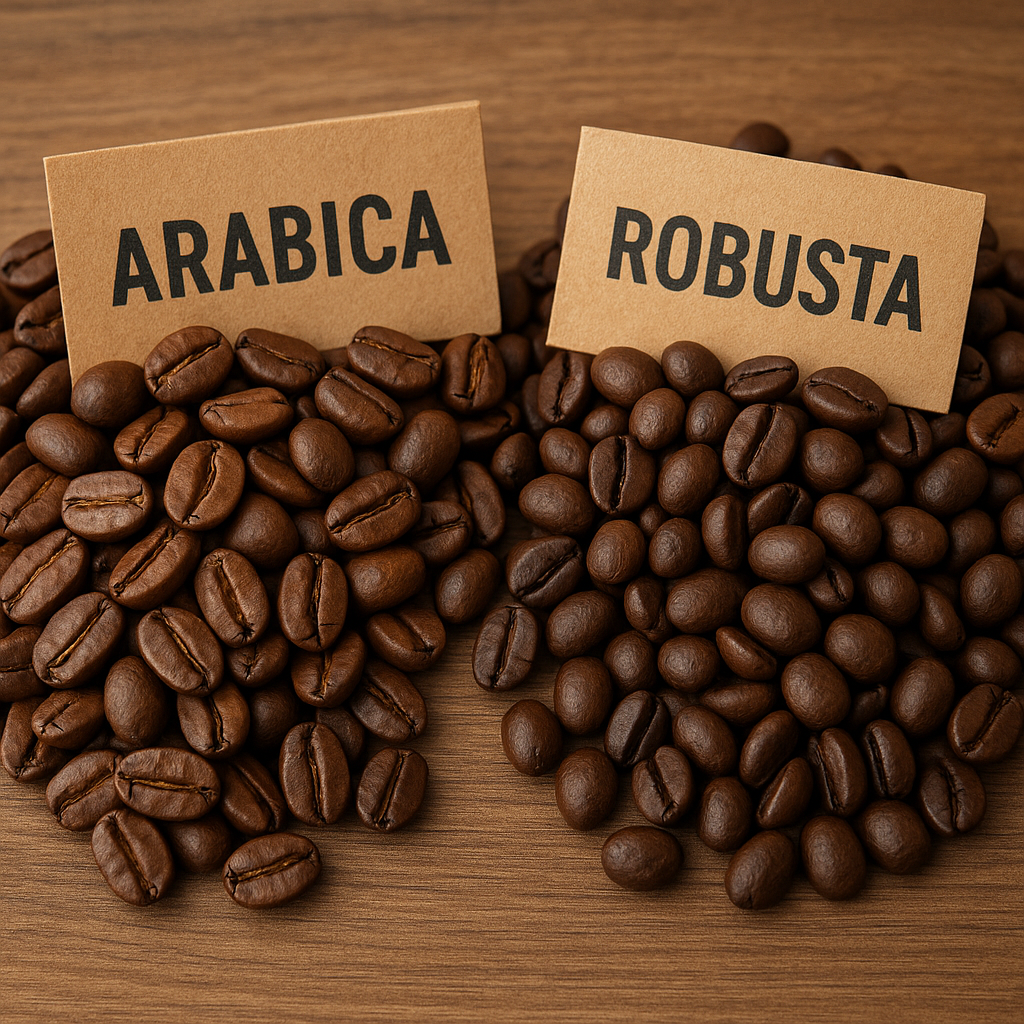
Appearance of the Beans
You can often tell Arabica and Robusta beans apart just by looking at them:
- Arabica beans are oval-shaped with a curved crease.
- Robusta beans are rounder and smaller, with a straight crease.
Roasted Robusta beans also tend to look darker and oilier, though this can depend on the roast level.
Price and Availability
- Arabica is more difficult and expensive to grow. It’s more sensitive to climate, altitude, and pests.
- Robusta is easier and cheaper to cultivate, making it more accessible and affordable.
That’s why instant coffee, supermarket blends, and lower-cost brands often use Robusta or a blend of both.
Specialty coffee roasters, on the other hand, usually work with 100% Arabica beans due to their superior flavor.
Which One Is Better?
It depends on what you’re looking for.
Choose Arabica if:
- You prefer a milder, more complex flavor.
- You’re into pour-overs, espressos, or specialty brews.
- You value aroma and acidity.
Choose Robusta if:
- You need a strong caffeine hit.
- You enjoy bold, bitter coffee.
- You’re drinking it with milk or sugar (Robusta stands up well to both).
- You want an affordable option for bulk use or espresso crema (Robusta produces more crema in espresso shots).
Many coffee blends combine Arabica and Robusta to get the best of both worlds — flavor from Arabica and body or strength from Robusta.
The Role of Robusta in Espresso
Interestingly, Robusta is a key component in traditional Italian espresso blends. It provides:
- More crema: the golden foam on top of espresso.
- Stronger body: making espresso feel richer and more full.
- Bold flavor: that cuts through milk in lattes or cappuccinos.
So while Robusta gets a bad reputation among specialty coffee drinkers, it plays an essential role in certain brewing styles.
Sustainability and Environmental Factors
- Arabica’s sensitivity to climate change is a growing concern. As global temperatures rise, the regions suitable for Arabica are shrinking.
- Robusta’s resilience makes it a sustainable alternative in areas where Arabica can no longer thrive.
- Researchers are even exploring hybrids and new strains that combine the best of both species — such as better flavor with hardiness.
Final Verdict: Know Your Preferences
In the end, it’s not about which bean is objectively better, but which one suits your taste, needs, and brewing method. If you love a light, fruity cup with lots of nuance — go for Arabica. If you need a punchy, robust brew to get you through the day — Robusta might be your best friend.
And don’t be afraid to try blends! Many of the world’s most beloved coffees are mixtures of both beans, offering balance and versatility.