
Coffee is one of the most consumed beverages in the world, yet it often sparks debate: Is it good or bad for your health? Some say it causes anxiety and disrupts sleep, while others praise it for preventing disease and boosting brain power.
In this article, we’ll break down the most common myths and facts about coffee and health, based on current scientific research. If you love coffee but worry about its effects, this guide will help you make informed choices.
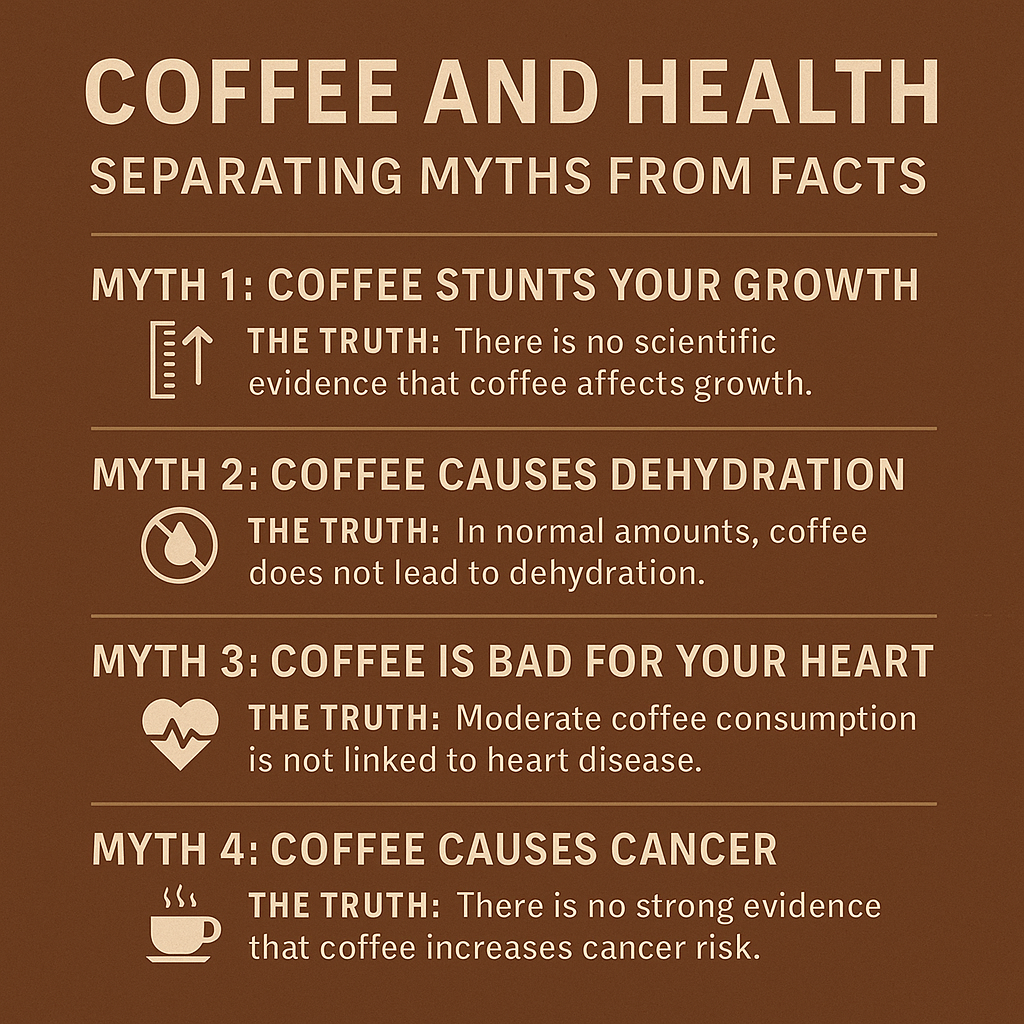
Myth 1: Coffee Stunts Your Growth
The Truth: There is no scientific evidence that coffee affects growth in children or adults. This myth likely began as a way to discourage kids from drinking coffee due to its caffeine content.
What to know: While children and teens should limit caffeine, adults don’t need to worry about coffee affecting height or bone growth — especially when calcium intake is adequate.
Myth 2: Coffee Causes Dehydration
The Truth: Coffee has a mild diuretic effect, but it doesn’t lead to dehydration when consumed in normal amounts.
What to know: Drinking coffee contributes to your daily fluid intake. Just be mindful of balance — especially if you’re drinking several cups in a hot climate or after exercise.
Myth 3: Coffee Is Bad for Your Heart
The Truth: Moderate coffee consumption is not linked to increased heart disease. In fact, it may lower the risk.
What to know:
- Some studies show 3–5 cups a day may reduce risk of stroke and heart failure.
- People with uncontrolled high blood pressure or sensitivity to caffeine should monitor intake.
If you’re unsure, talk to a doctor about your caffeine tolerance and heart health.
Myth 4: Coffee Causes Cancer
The Truth: There’s no strong evidence linking coffee to cancer. In fact, many studies suggest it may be protective.
What to know:
- Coffee contains antioxidants and polyphenols that may reduce inflammation and cell damage.
- The WHO removed coffee from its list of possible carcinogens in 2016.
- However, very hot beverages (above 65°C) may increase risk of esophageal cancer — so let your coffee cool slightly before drinking.
Myth 5: Coffee Helps You Sober Up
The Truth: Coffee does not reverse the effects of alcohol.
What to know: It may make you feel more alert, but it doesn’t reduce blood alcohol levels or improve motor skills. Don’t rely on coffee to “sober up” after drinking.
Myth 6: Decaf Is Healthier Than Regular Coffee
The Truth: Both decaf and regular coffee have similar health benefits — decaf simply has less caffeine.
What to know: If you’re sensitive to caffeine, decaf is a great alternative. But it still contains antioxidants and may offer the same protective effects for brain and heart health.
Health Benefits of Coffee (When Consumed in Moderation)
- Brain health: May reduce risk of Alzheimer’s and Parkinson’s
- Mood: Linked to lower rates of depression and suicide
- Liver protection: Coffee drinkers have a lower risk of liver disease
- Diabetes prevention: Associated with reduced risk of type 2 diabetes
- Longevity: Some studies link coffee to longer lifespan
Most benefits come from black coffee — without added sugar, cream, or syrups.
How Much Coffee Is Too Much?
The FDA considers up to 400mg of caffeine per day safe for healthy adults — that’s about 3–5 cups of coffee.
Signs you may be overdoing it:
- Anxiety or restlessness
- Insomnia
- Increased heart rate
- Upset stomach
- Headaches or dependence
If you notice these symptoms, try cutting back slowly or switching to decaf.
Coffee and Pregnancy
Pregnant women are advised to limit caffeine intake to 200mg per day (about 1–2 small cups). High caffeine levels may be linked to complications, so always consult your doctor.
Tips for Healthier Coffee Habits
- Skip added sugars and syrups
- Use plant-based or low-fat milk if desired
- Choose organic beans to reduce exposure to pesticides
- Avoid very hot coffee — let it cool slightly
- Stay hydrated with water throughout the day
- Don’t drink coffee too close to bedtime
Final Sip: Coffee Can Be Part of a Healthy Life
When enjoyed in moderation, coffee offers more than just energy — it delivers potential health benefits, mood boosts, and even protection against chronic disease. The key is to stay informed, listen to your body, and enjoy it mindfully.
So if you love your morning cup, drink it with confidence — it’s not just delicious, it might actually be doing you some good.