
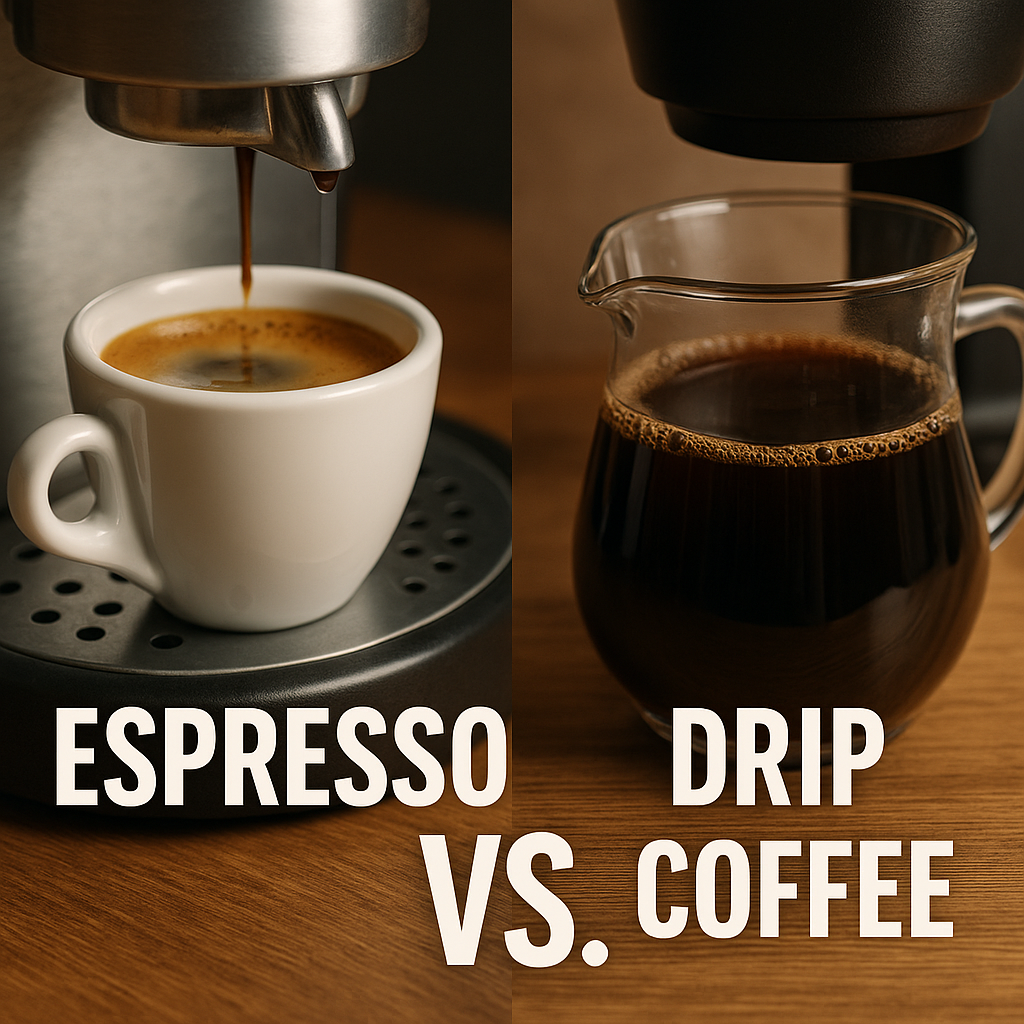
If you’re new to coffee or just want to understand your brew better, you may wonder: what’s the real difference between espresso and drip coffee? Is one stronger than the other? Does it all come down to taste, caffeine, or technique?
This article breaks down the differences between espresso and drip coffee in terms of brewing methods, flavor, caffeine, and equipment, helping you choose the best option for your taste and lifestyle.
What Is Espresso?
Espresso is a concentrated coffee shot brewed by forcing hot water through finely ground coffee at high pressure(typically 9 bars).
- Brew time: 25–30 seconds
- Serving size: 1 ounce (single shot)
- Texture: Thick, rich, with crema (a golden foam on top)
Espresso is the foundation for drinks like lattes, cappuccinos, macchiatos, and Americanos.
What Is Drip Coffee?
Drip coffee (also called filter or pour-over coffee) is made by slowly pouring hot water over medium-ground coffee, which passes through a filter and drips into a carafe or mug.
- Brew time: 3–5 minutes
- Serving size: 8–12 ounces
- Texture: Cleaner, smoother, less concentrated
It’s the most common home and office brewing method, especially in the U.S. and Europe.
Key Differences Between Espresso and Drip Coffee
1. Brewing Method
- Espresso uses pressure, typically 9 bars, to extract in under 30 seconds.
- Drip coffee relies on gravity and time for extraction.
Espresso machines are more complex and expensive, while drip brewing can be done with a simple pour-over cone or automatic machine.
2. Grind Size
- Espresso requires a fine grind (like table salt)
- Drip coffee uses a medium grind (like sand)
Grind size affects extraction. Too fine in a drip? Over-extracted. Too coarse in espresso? Weak and sour shot.
3. Caffeine Content
Espresso is more concentrated, but a full cup of drip usually has more caffeine overall.
On average:
- 1 espresso shot (30ml) = 60–80mg caffeine
- 1 cup of drip coffee (240ml) = 90–140mg caffeine
If you want a quick jolt, espresso hits fast. For longer-lasting effects, go with drip.
4. Flavor Profile
- Espresso: Bold, intense, sometimes bitter, with thick body
- Drip coffee: Clean, smooth, with more clarity and subtlety
Espresso emphasizes roast and body, while drip coffee showcases acidity and complexity of origin.
5. Equipment and Skill
Espresso:
- Requires a machine, tamper, and often a grinder
- Steeper learning curve
- Precise variables (grind, dose, pressure, tamping)
Drip Coffee:
- Can be as simple as a drip machine or pour-over
- Easier for beginners
- Less sensitive to slight mistakes
6. Serving and Ritual
- Espresso is quick, intense, and usually served in small cups
- Drip is longer, more relaxed, and often enjoyed over time
Your choice may depend on your lifestyle — quick energy shot vs. slow morning ritual.
Which One Is Better?
That depends on your preferences:
Choose Espresso if:
- You love bold, rich, concentrated flavor
- You enjoy espresso-based drinks (latte, cappuccino)
- You like the process and challenge of mastering technique
Choose Drip Coffee if:
- You prefer lighter, cleaner flavors
- You drink larger volumes
- You want an easier, more forgiving brew process
Can You Use the Same Beans?
Yes! But:
- Some beans are roasted specifically for espresso (usually darker)
- Others are light to medium roast and better for drip
- You can experiment — roast level and grind size are key
Final Sip: It’s Not a Battle — It’s a Choice
Espresso and drip coffee aren’t rivals — they’re just different expressions of the same beautiful bean. One delivers intensity and speed, the other offers clarity and comfort.
Try both. Learn what you enjoy. And remember — there’s no wrong way to love coffee.