
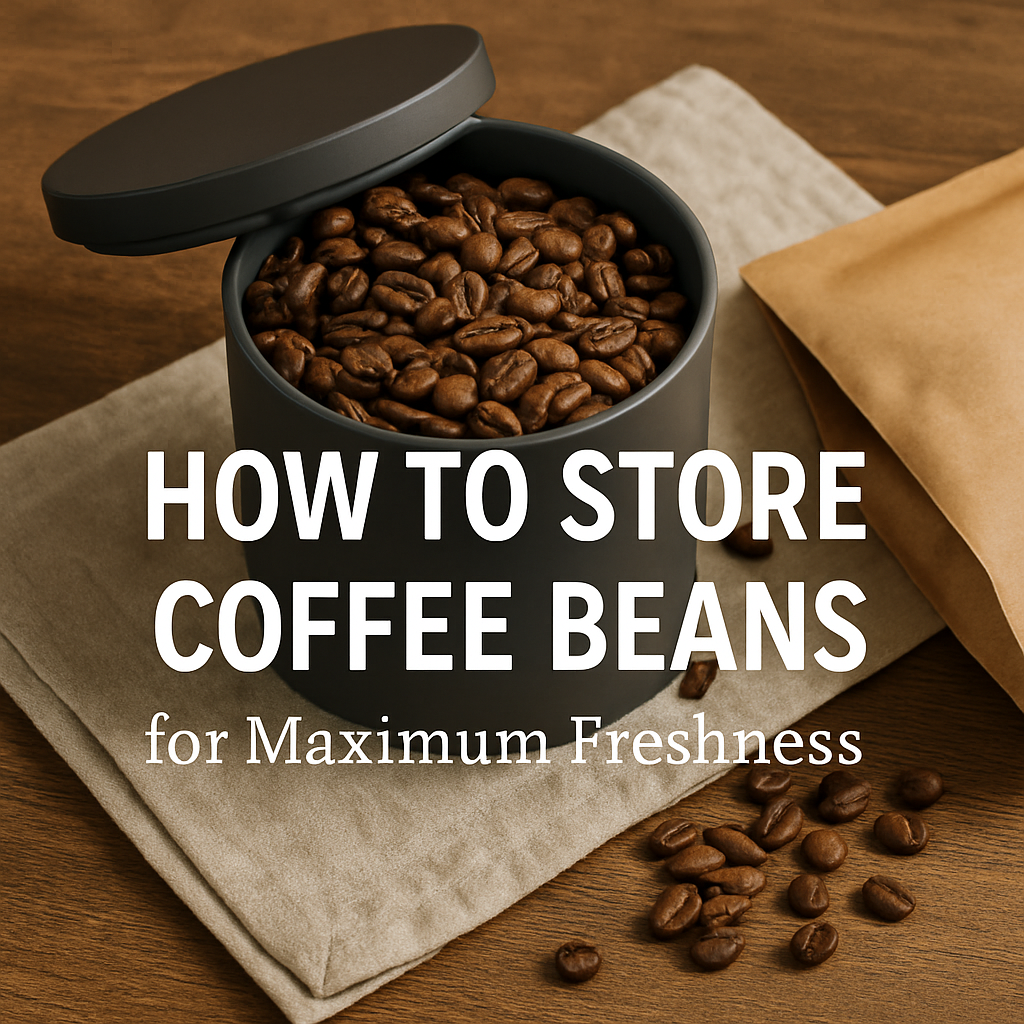
You bought a bag of delicious, fresh-roasted coffee. You brew a perfect cup the first few days — but after a week or two, it starts tasting flat, stale, or bitter. What happened?
The answer is often poor coffee storage. Coffee is sensitive to air, light, moisture, and temperature. If stored incorrectly, even the best beans lose their flavor fast.
In this article, you’ll learn exactly how to store your coffee beans properly — whether at home, in the office, or on the road.
Why Freshness Matters
Coffee beans begin to degrade immediately after roasting. The compounds that give coffee its complex aroma and flavor are volatile — and they fade quickly when exposed to the wrong conditions.
Proper storage helps preserve:
- Aroma
- Flavor clarity
- Acidity and sweetness
- Mouthfeel
The fresher the beans, the better the brew.
Enemies of Coffee Freshness
To keep your beans fresh, you need to protect them from:
1. Oxygen
Exposure to air leads to oxidation, which dulls flavor and aroma.
2. Moisture
Moisture can cause mold, clumping, or premature extraction — especially in ground coffee.
3. Heat
High temperatures speed up chemical breakdown and aging.
4. Light
UV rays damage oils and degrade the coffee’s structure.
Best Practices for Storing Coffee Beans
1. Keep Beans in an Airtight Container
Use a sealed container that prevents oxygen from getting in. The best options include:
- Vacuum-sealed containers
- Canisters with CO₂ valves (like Fellow Atmos)
- Glass jars with airtight lids (stored in the dark)
Avoid paper bags or zip-top bags — they let in too much air.
2. Store in a Cool, Dark Place
Keep coffee away from:
- Ovens or windows
- Warm appliances (fridges, dishwashers)
- Sunlight or heat sources
A pantry or kitchen cabinet is ideal.
Avoid the refrigerator. Why?
- It adds moisture and odors from other foods.
- Constant opening/closing causes temperature swings.
3. Don’t Freeze Unless You Must
Freezing coffee beans is controversial, but it can be okay if:
- Beans are sealed in air-tight, moisture-proof bags
- You’re storing large amounts for weeks or months
- You only thaw once — do not refreeze
For daily use, skip the freezer. The risk of condensation is too high.
4. Buy Whole Beans, Not Ground Coffee
Pre-ground coffee loses freshness much faster than whole beans — often in a matter of days.
If you care about flavor:
- Always buy whole beans
- Grind right before brewing
5. Only Buy What You Need
Purchase smaller quantities more often, rather than large bags that sit for months. Most coffee is best within 2–4 weeksof roasting.
Some roasters print the roast date on the bag. Choose recent roasts over just “best by” dates.
6. Reseal Bags Tightly
If using the original bag, press out the air and fold tightly before clipping shut.
Even better: transfer beans to an airtight container after opening.
Ground Coffee: Special Storage Tips
Ground coffee loses aroma faster. If you must use it:
- Store in an airtight container
- Use within 7–10 days of opening
- Keep in a cool, dry place — away from your stove or sink
Avoid buying large bags of ground coffee unless you’ll use them quickly.
Travel or Office Coffee Storage
On the go? Use a small airtight container or reusable travel tin. Keep it in your bag, backpack, or locker — away from heat.
Instant coffee? Keep packets sealed and dry — and use clean water for brewing.
Final Sip: Treat Your Beans Like Fresh Food
Coffee is an agricultural product, not a pantry item to stash and forget. With the right storage habits, your beans will stay fresher longer — and your cup will taste richer, brighter, and more satisfying.
So protect those beans from air, heat, moisture, and light — and give your coffee the shelf life (and flavor) it deserves.