
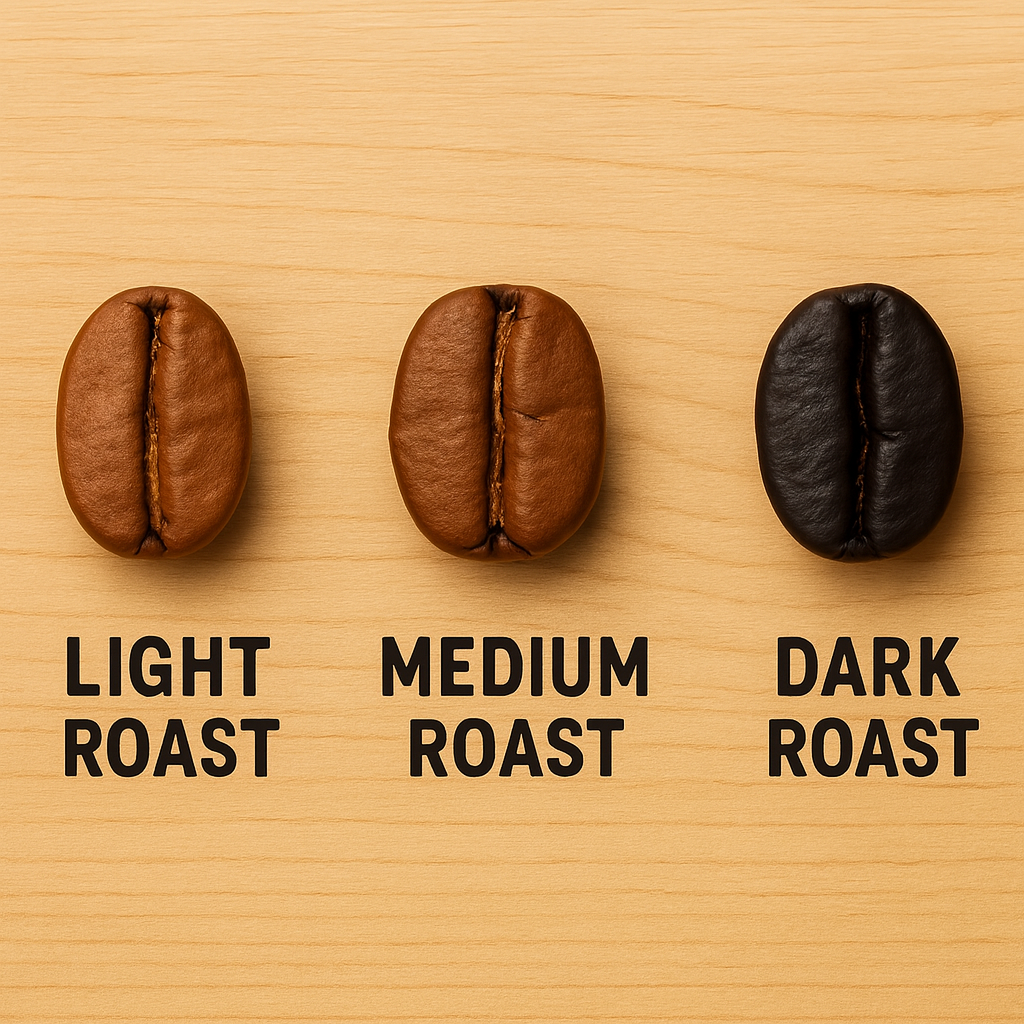
When choosing coffee, one of the first things you’ll notice on the packaging is the roast level — light, medium, or dark. But what do these labels really mean? And how do they affect the flavor, aroma, and body of your coffee?
In this article, you’ll learn the differences between roast levels, how each one tastes, and how to choose the right roast based on your brewing method and personal preference.
What Is Coffee Roasting?
Roasting is the process that transforms green coffee beans into the aromatic, flavorful beans we brew. During roasting, the beans undergo chemical reactions that develop the color, flavor, and aroma of coffee.
The roast level depends on how long and how hot the beans are roasted. The longer and hotter the roast, the darker and more intense the bean becomes.
Three Main Roast Levels:
- Light Roast
- Medium Roast
- Dark Roast
Let’s explore each one in more detail.
1. Light Roast: Bright, Fruity, and Complex
Color:
- Light brown
- No oil on the surface of the beans
Flavor Profile:
- Bright acidity
- Fruity, floral, and tea-like notes
- High complexity
- Highlights the origin of the bean (e.g., Ethiopian beans taste like berries)
Common Names:
- Cinnamon Roast
- New England Roast
- Half City
Best Brewing Methods:
- Pour-over
- Chemex
- AeroPress
- Cold brew
Pro Tip: Light roasts are ideal if you want to taste the unique characteristics of the region where the coffee was grown.
2. Medium Roast: Balanced and Versatile
Color:
- Medium brown
- Very little oil on the surface
Flavor Profile:
- Balanced acidity and sweetness
- Notes of chocolate, nuts, caramel
- Smooth and round mouthfeel
- Slightly more developed than light roast, but still retains origin flavor
Common Names:
- City Roast
- Breakfast Roast
- American Roast
Best Brewing Methods:
- Drip coffee
- French press
- Espresso (for a smoother, mellow taste)
Pro Tip: Medium roasts are great for beginners — they’re easy to brew and appeal to most palates.
3. Dark Roast: Bold, Rich, and Bitter
Color:
- Dark brown to almost black
- Oily surface
Flavor Profile:
- Low acidity
- Bittersweet, smoky, or even burnt notes
- Heavy body
- Less origin flavor — roast dominates the taste
Common Names:
- French Roast
- Italian Roast
- Espresso Roast
- Continental Roast
Best Brewing Methods:
- Espresso
- Moka pot
- French press (for a richer body)
- Great for milk-based drinks (lattes, cappuccinos)
Pro Tip: If you like strong coffee or mix it with milk, dark roast might be your favorite.
The Science Behind Roast Levels
As coffee roasts progress, beans go through two major phases:
- First Crack: A popping sound that marks the beginning of light to medium roasts. Sugars start to caramelize, and acids become more vibrant.
- Second Crack: A louder crack indicating the start of dark roasting. At this point, oils begin to rise to the surface, and the roast flavor becomes dominant.
The more you roast, the more you:
- Lose acidity
- Gain bitterness
- Mask the origin character
- Increase body
Roast and Caffeine: Myth vs. Reality
A common myth is that dark roasts have more caffeine than light roasts. The truth is more nuanced.
Here’s the breakdown:
- Per scoop: Light roasts may have slightly more caffeine (because beans are denser).
- Per weight (gram): Caffeine content is very similar across roast levels.
So if you’re scooping by volume (e.g., tablespoons), you may get more caffeine from a light roast.
Which Roast Is Best for You?
Here’s a quick guide based on your taste preference:
| You like… | Try this roast |
|---|---|
| Bright, fruity, vibrant coffee | Light roast |
| Balanced, smooth, chocolatey coffee | Medium roast |
| Bold, intense, low-acid coffee | Dark roast |
| Strong espresso or milky drinks | Dark roast |
| Tasting origin-specific notes | Light or medium roast |
Experiment! Taste the same coffee origin at different roast levels to see how it changes. Some roasters even offer tasting sets for this purpose.
Final Sip: Roast Level Is Personal
There’s no “best” roast — only the best one for you. Each roast level offers something unique, and your ideal choice depends on your taste, brew method, and mood.
Understanding roast levels empowers you to:
- Choose coffee that matches your flavor preference
- Brew more confidently
- Appreciate the roasting craft behind every bag
So next time you’re choosing coffee, go beyond the label and consider the roast — it’s one of the most important keys to flavor.