
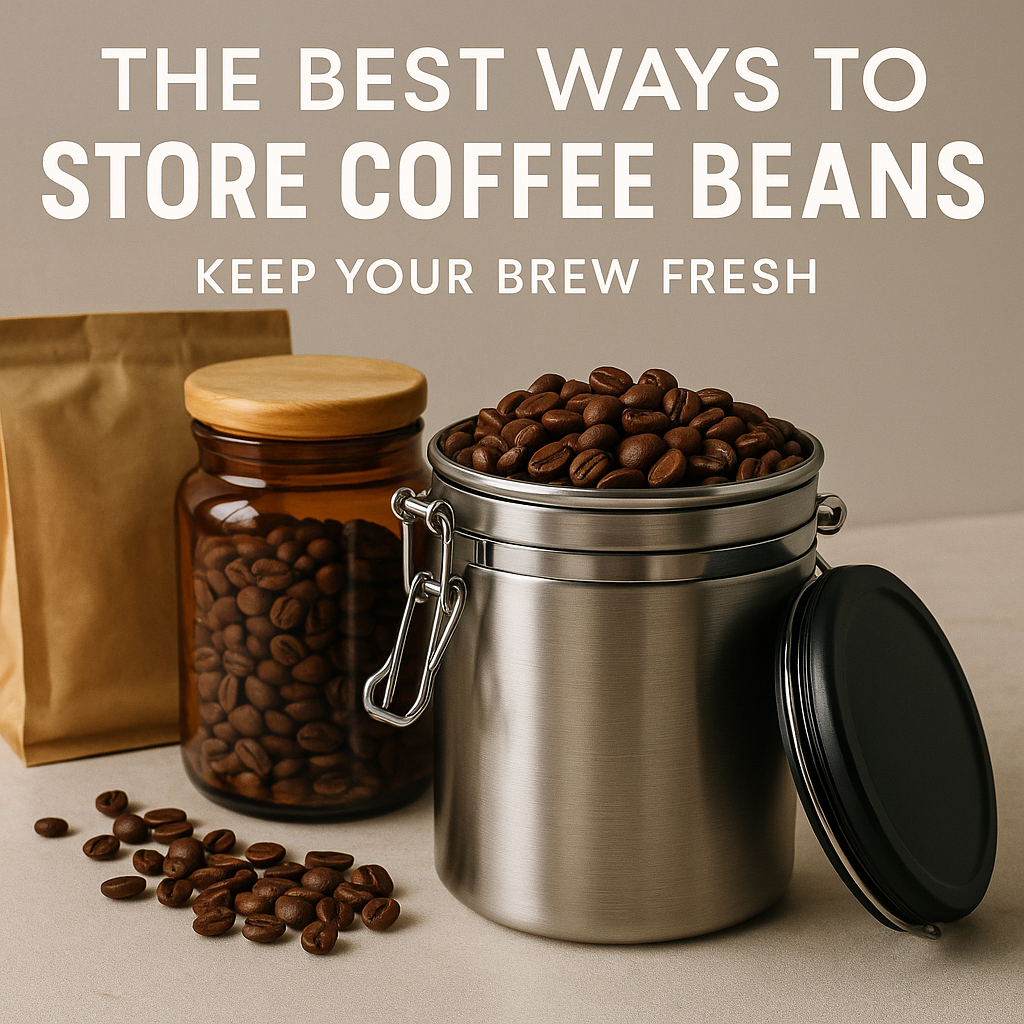
Buying great coffee is only the beginning — how you store your beans can make or break the flavor in your cup. Oxygen, light, moisture, and heat are the enemies of fresh coffee, and even high-quality beans can go stale fast if not stored properly.
In this article, you’ll learn the best ways to store coffee at home to preserve freshness, flavor, and aroma.
Why Proper Coffee Storage Matters
Coffee beans are highly sensitive after roasting. Exposure to air and moisture triggers:
- Oxidation: breaks down aromatic oils
- Staleness: flat or bitter flavor
- Loss of aroma and complexity
Beans begin to lose freshness within days of roasting — especially if not stored right. Keeping them fresh is essential for a great brew.
How Long Does Coffee Stay Fresh?
General guidelines:
- Whole beans: Stay fresh for 2–4 weeks after roast date
- Ground coffee: Stays fresh for 1–2 weeks
- Sealed, unopened bags: Can last longer (but still degrade over time)
Pro tip: Always buy coffee with a roast date, not just a best-by date. Freshness starts counting from the roast, not the day you open the bag.
1. Choose the Right Container
Your storage container should protect coffee from:
- Air (oxygen)
- Light
- Heat
- Moisture
Best Options:
- Opaque airtight canisters (with one-way valves)
- Stainless steel or ceramic jars
- Vacuum-sealed containers (e.g., Fellow Atmos, Airscape)
- Mason jars (opaque or stored in a dark cabinet)
Avoid:
- Clear glass jars in bright kitchens
- Containers that don’t seal tightly
2. Store Whole Beans, Not Ground Coffee
Grinding increases surface area and accelerates staling.
Why whole beans are better:
- Stay fresher longer
- Grind size can be adjusted to your brew method
- Better flavor and aroma when brewed
Grind your beans just before brewing for best results.
3. Keep Coffee Away from Heat, Light, and Humidity
Don’t store your coffee near:
- The oven or stovetop
- A sunny window
- The fridge door
- Open shelves in humid environments
Instead, choose:
- A cool, dark cabinet or pantry
- A drawer far from heat sources
- A designated coffee storage container in a closed cupboard
4. Should You Store Coffee in the Freezer?
Yes, but only under specific conditions.
When done correctly, freezing can slow oxidation and preserve freshness for weeks or months.
How to Freeze Coffee Properly:
- Freeze whole beans, not ground
- Divide into small, airtight portions (daily or weekly amounts)
- Use vacuum-sealed bags or zipper bags with the air pushed out
- Thaw only what you’ll use, and don’t refreeze
Freezing is ideal if:
- You buy in bulk
- You won’t use the beans for a while
- You live in a humid climate
Avoid repeatedly opening and closing a frozen coffee bag — condensation ruins flavor.
5. Don’t Rely on the Original Bag
Most coffee bags:
- Are not completely airtight once opened
- Don’t block light
- Allow some oxygen flow (unless valve-sealed and resealable)
If you must use the original bag:
- Roll it tightly from the top
- Seal it with a clip
- Place it inside another airtight container
Better yet — transfer beans to a proper storage jar after opening.
6. Buy Coffee in Smaller Batches
Freshness is easier to manage when you:
- Buy just enough for 1–2 weeks
- Visit your local roaster regularly
- Rotate between different single-origin or blends
Avoid stocking up too much unless you plan to freeze it.
7. Signs Your Coffee Is No Longer Fresh
Not sure if your beans are stale? Look for:
- Dull, muted flavor
- Loss of aroma
- Flat or bitter taste
- Beans that look dry and cracked
- No bloom when brewing (for fresh coffee, the grounds puff up)
If your coffee no longer excites you — it might just be time for a new, fresher bag.
Final Sip: Freshness Is Flavor
Proper storage is a simple way to upgrade your coffee routine without changing your beans or gear. Keep your beans airtight, cool, and in the dark — and you’ll preserve the rich, nuanced flavors that make great coffee worth savoring.
So treat your coffee like the fresh ingredient it is — because when you protect the bean, you protect the brew.