
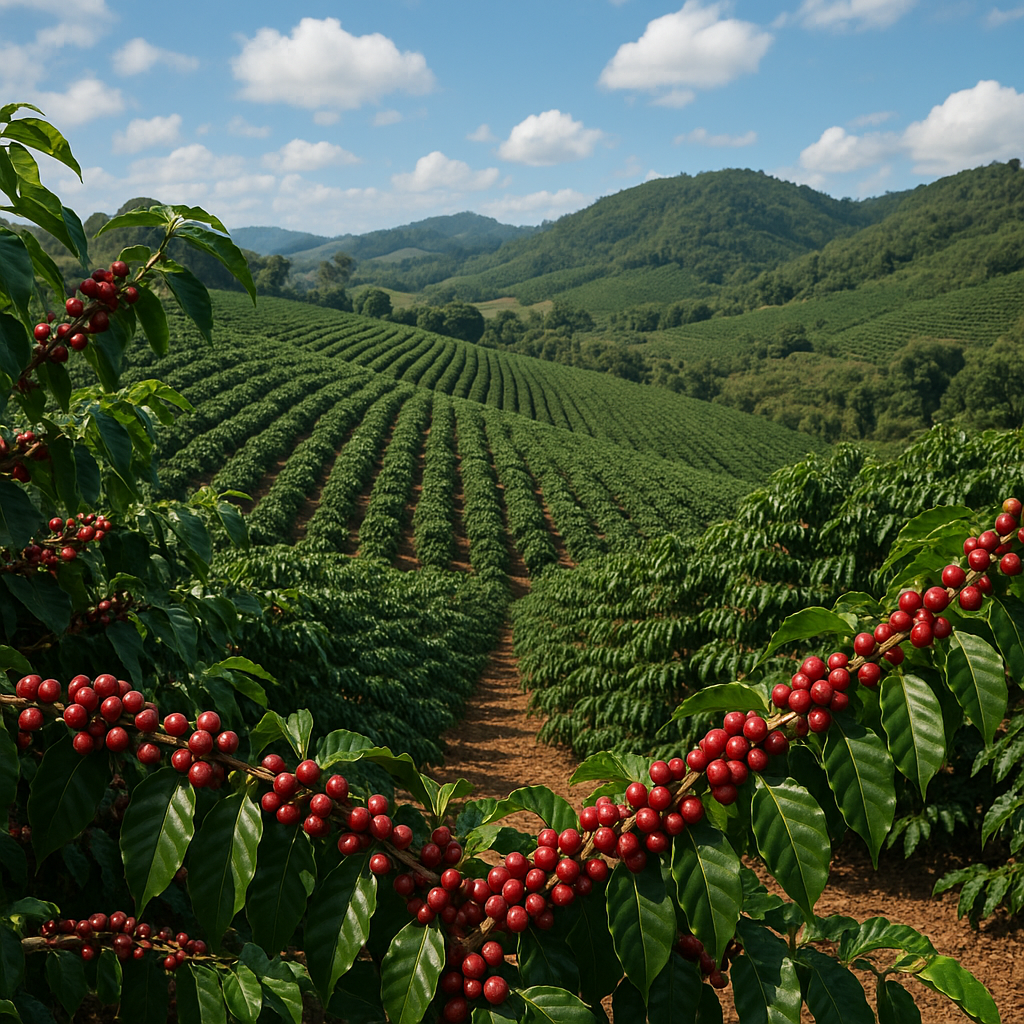
Brazil and coffee are almost synonymous. As the world’s largest coffee producer for more than 150 years, Brazil has played a critical role in shaping the global coffee industry — and in building a deep cultural connection to the beverage. But the journey from colonial crop to national symbol is one marked by economic ambition, social transformation, and global influence.
In this article, we’ll explore the fascinating evolution of coffee in Brazil, from its earliest introduction to its iconic status today.
Coffee’s Arrival in Brazil
Coffee wasn’t native to Brazil. It was introduced in the early 18th century, likely around 1727. According to legend, a Portuguese lieutenant named Francisco de Melo Palheta smuggled coffee seeds out of French Guiana under diplomatic pretense — some say he charmed the governor’s wife into giving him a few cuttings hidden in a bouquet.
Whatever the truth, those few plants would spark one of the most important agricultural revolutions in Brazilian history.
Initially, coffee was grown in the northern state of Pará, but it was in Rio de Janeiro, São Paulo, and Minas Gerais — the southeastern regions — that the industry truly took off.
The Coffee Boom of the 19th Century
By the mid-1800s, coffee had become Brazil’s dominant export. Plantations spread rapidly, fueled by growing demand in Europe and North America. The climate and soil conditions in southeastern Brazil proved ideal for coffee cultivation.
This period became known as the “coffee cycle”, and it transformed the country’s economy, infrastructure, and even politics. Railroads and ports were built to support the booming trade. Cities like São Paulo grew rapidly, attracting waves of immigrants and becoming major urban centers.
At one point, Brazil was producing over 75% of the world’s coffee supply.
The Dark Side: Slavery and Exploitation
Brazil’s coffee boom, however, was built on the backs of enslaved people. For much of the 19th century, African slaves were forced to work on the coffee plantations under brutal conditions.
Slavery was officially abolished in Brazil in 1888, making it the last country in the Americas to do so. The end of slavery created a labor vacuum, which plantation owners filled by encouraging immigration from countries like Italy, Germany, and Japan.
Even after the abolition of slavery, harsh working conditions persisted, and economic inequality remained a major issue in the rural coffee-growing regions.
Coffee and Politics: The “Coffee with Milk” Era
During the early 20th century, coffee even played a role in Brazilian politics. The so-called “café com leite” (coffee with milk) politics referred to the alternating dominance of São Paulo (a coffee-producing powerhouse) and Minas Gerais (a dairy-rich region) in Brazil’s federal government.
This period lasted until the 1930 revolution and reflected the immense power and influence held by the coffee elite.
Technological and Agronomic Advancements
As the industry matured, Brazilian coffee farmers began to invest in modernizing production. Mechanization, improved harvesting techniques, and better processing methods helped increase efficiency and quality.
Government-supported research institutions, such as Embrapa (Brazilian Agricultural Research Corporation), also played a major role in developing disease-resistant coffee plants and sustainable farming techniques.
Brazil’s ability to produce large quantities of coffee at relatively low costs has allowed it to remain the world leader in coffee exports for decades.
Brazil’s Role in the Global Coffee Market
Today, Brazil is responsible for about one-third of all coffee consumed worldwide. The country produces both Arabica and Robusta beans (locally known as Conilon), with a strong focus on quantity and increasing efforts on quality.
Brazil’s coffee is exported to dozens of countries and used in everything from instant coffee blends to high-end specialty roasts.
The Rise of Specialty Coffee in Brazil
In the past, Brazil was mostly known for bulk, commodity-grade coffee. But in recent years, the country has emerged as a key player in the specialty coffee movement.
Small and medium-sized producers, especially in regions like Cerrado Mineiro, Sul de Minas, and Chapada Diamantina, are focusing on high-quality, traceable beans with unique flavor profiles.
Baristas, coffee roasters, and consumers around the world now recognize Brazilian beans for their versatility, sweetness, and consistency.
Coffee competitions, such as the Cup of Excellence, have helped elevate Brazilian producers on the global stage.
Coffee as a Cultural Icon in Brazil
Beyond its economic importance, coffee holds deep cultural significance in Brazil. It’s a part of daily life — from the “cafezinho” (a small, sweetened coffee offered as a gesture of hospitality) to long conversations at local cafés.
Coffee breaks are an essential part of the Brazilian workday. Homes, offices, gas stations, and even barbershops often have a pot of coffee brewing at all times. It’s not just a beverage — it’s a ritual.
Brazilian Coffee Today: Challenges and Innovations
Despite its global dominance, the Brazilian coffee industry faces several challenges:
- Climate change: Droughts, frosts, and rising temperatures threaten crop yields and quality.
- Labor shortages: As rural populations decline, finding skilled labor is becoming more difficult.
- Sustainability: There is increasing pressure to adopt environmentally friendly farming practices and reduce deforestation.
However, Brazilian farmers and cooperatives are also leading in innovation. From drone technology to blockchain traceability, the country is embracing new tools to stay ahead in a competitive market.
Final Thoughts: From Commodity to Craft
Brazil’s coffee story is one of transformation. What began as a colonial crop has become a symbol of national identity and pride. Through resilience, innovation, and adaptation, Brazil has not only maintained its position as the top coffee producer in the world — it has also become a force in shaping the future of coffee.
So the next time you enjoy a cup of Brazilian coffee, remember: you’re tasting more than just beans. You’re experiencing a legacy built over centuries, one sip at a time.