
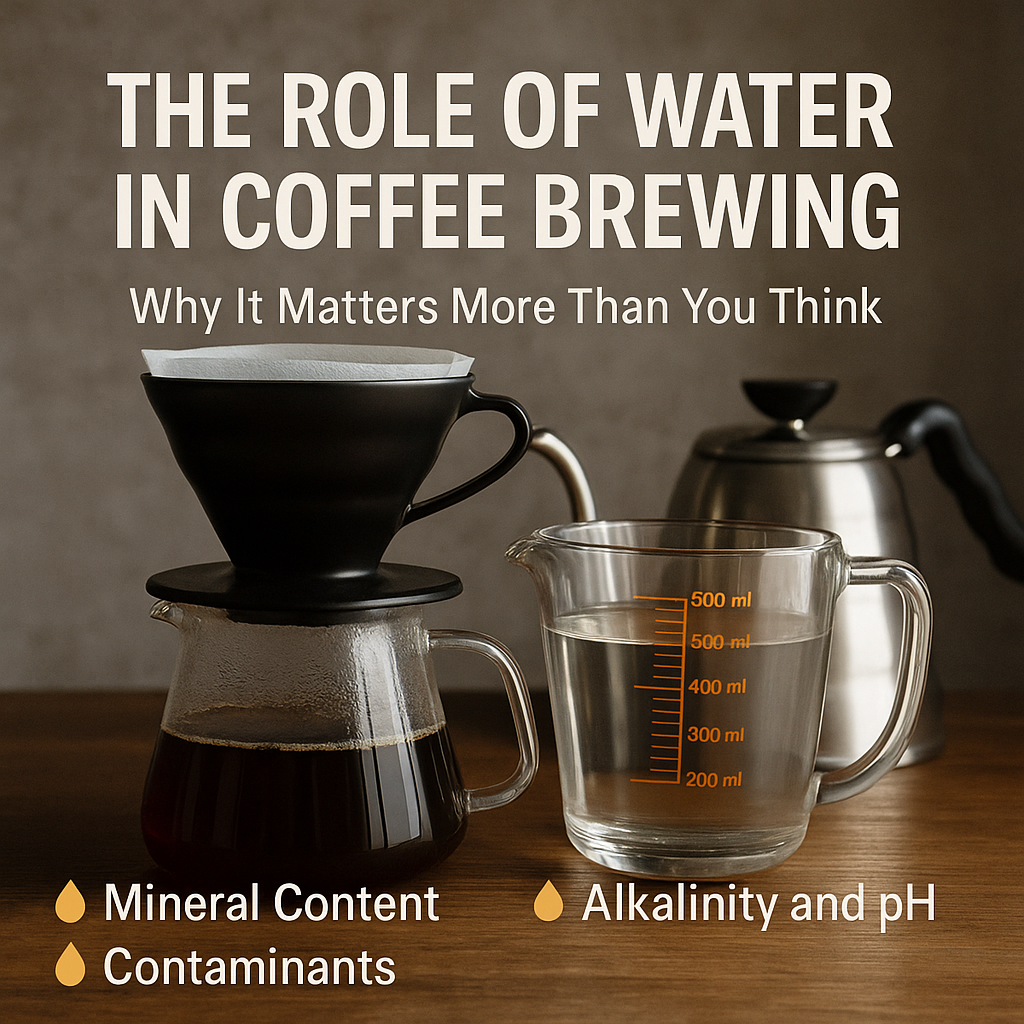
Most people focus on beans, grind size, or brewing gear — but there’s another ingredient that makes up 98% of your cup: water.
Yes, water plays a crucial role in coffee brewing, affecting extraction, flavor clarity, aroma, and even mouthfeel. In this article, we’ll explore how water quality, temperature, and mineral content can either enhance or ruin your coffee — and what you can do about it.
Why Water Quality Matters
Coffee is mostly water. If your water tastes bad on its own, it’ll make your coffee taste bad too.
Poor water quality can cause:
- Flat, dull flavors
- Over- or under-extraction
- Unwanted bitterness or sourness
- Damage to your brewing equipment (scale buildup)
Great water brings out the true character of your beans — whether fruity, nutty, chocolatey, or floral.
The 3 Key Elements of Brewing Water
1. Mineral Content (Hardness)
Water minerals help extract flavor compounds from coffee. Too much or too little can throw things off.
- Soft water (low minerals) = under-extracted, sour, weak flavor
- Hard water (high minerals) = over-extracted, bitter, chalky taste
The ideal range for total dissolved solids (TDS) is 75–250 ppm, with 150 ppm as a sweet spot for most brewers.
2. Alkalinity and pH
pH affects how acidic your coffee tastes.
- Ideal pH range: 6.5–7.5
- Too acidic (low pH) = sharp, sour brews
- Too alkaline (high pH) = flat, muted flavor
Balanced water = balanced coffee.
3. Contaminants
Chlorine and other chemicals often found in tap water ruin flavor.
- Chlorine = chemical taste
- Iron = metallic aftertaste
- Sediment = muddied brews
Always filter your water if using tap.
Best Types of Water for Brewing Coffee
✅ Filtered Water
- Removes chlorine and sediment
- Keeps essential minerals
- Easy and affordable
- Ideal for most home brewers
✅ Bottled Spring Water
- Balanced mineral content
- Great if your tap water is poor
- Not always eco-friendly or consistent
✅ Custom Brewing Water (e.g., Third Wave Water)
- Pre-formulated minerals added to distilled water
- Ideal for espresso or competition-level brewing
- Pricey, but perfect control
❌ Distilled or Reverse Osmosis (RO) Water
- Too pure — lacks minerals needed for extraction
- Flat flavor and poor body
- Can be mixed with mineral packets if needed
❌ Unfiltered Tap Water
- Often contains chlorine, metals, or scale-causing minerals
- Inconsistent quality from region to region
Water Temperature: A Key Variable
Temperature affects how quickly and effectively flavors are extracted.
- Ideal brewing range: 195°F to 205°F (90°C to 96°C)
- Below 195°F = under-extracted (sour or weak)
- Above 205°F = over-extracted (bitter or dry)
For best results:
- Use a thermometer or kettle with temp control
- Let boiling water cool 30–60 seconds before brewing
Tips for Improving Water at Home
- Use a filter pitcher (e.g., Brita, Soma)
- Install a faucet-mounted or under-sink filter
- Buy a home water testing kit to check minerals and pH
- Experiment with bottled spring waters to find the one that tastes best
- Try mineral packets for ultra-precision brewing
Water and Equipment Maintenance
Hard water causes limescale buildup in kettles, espresso machines, and drip systems. This affects:
- Heating efficiency
- Water flow
- Machine lifespan
Descale your equipment monthly if using hard water.
Use descaling products or natural alternatives like citric acid or vinegar (check your machine’s manual first).
Final Sip: Don’t Overlook the Most Important Ingredient
Water might seem like an afterthought, but it’s one of the most powerful tools in your brewing arsenal. By upgrading your water quality and using the right temperature, you can unlock more flavor from your beans — without changing anything else.
So next time your coffee tastes off, don’t just blame the beans. Check your water — because great coffee starts long before the first drop hits your cup.