
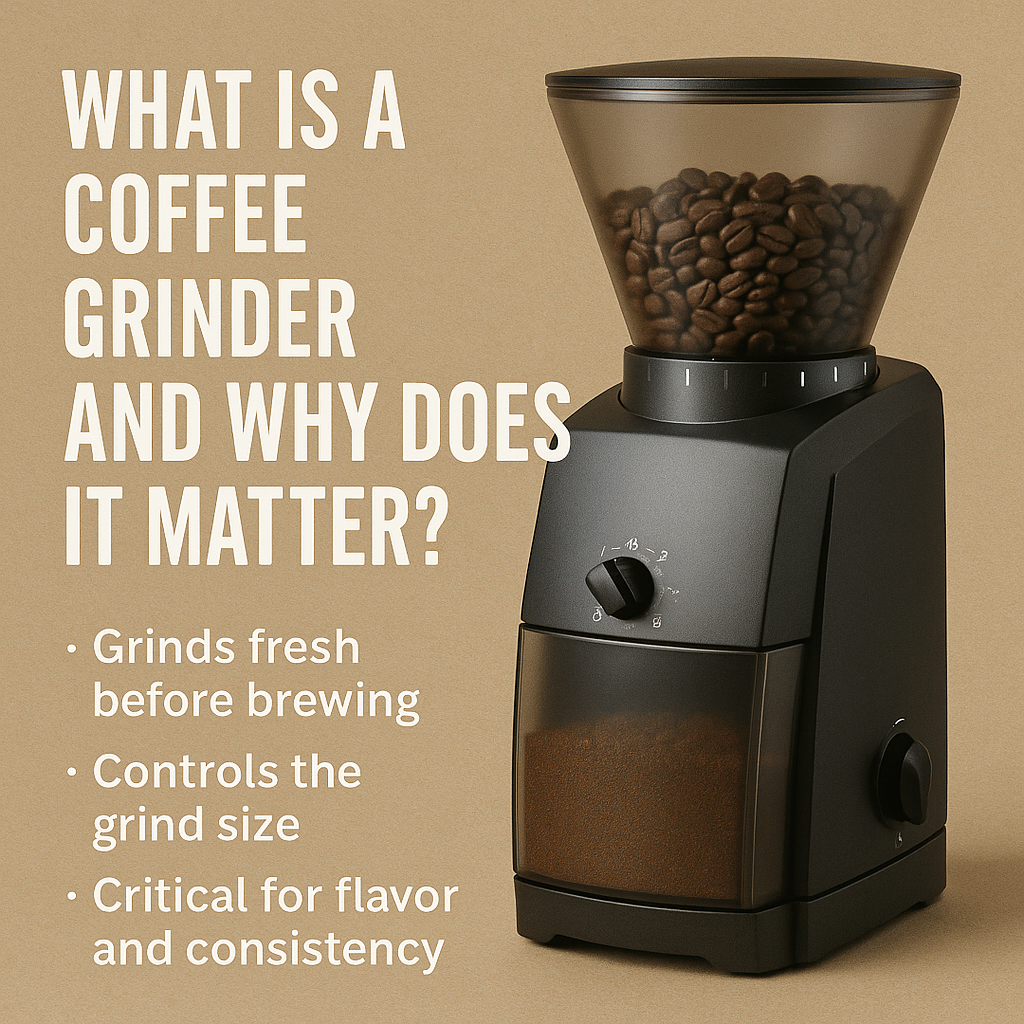
A good coffee grinder is often the most overlooked tool in home brewing — but it’s also one of the most important. Whether you use a French press or an espresso machine, your grinder plays a critical role in the flavor, consistency, and quality of your coffee.
In this article, we’ll explain what a coffee grinder does, the different types, and how to choose the right one for your brewing method.
Why Grinding Coffee Matters
When coffee is ground:
- Its surface area increases, allowing water to extract flavor
- It begins to oxidize faster (meaning it stales quicker)
- The grind size determines how quickly and evenly extraction happens
The wrong grind size can result in:
- Over-extraction (too bitter)
- Under-extraction (too sour)
- Inconsistent flavor
Grinding your own beans fresh, just before brewing, gives you the best flavor and control.
Types of Coffee Grinders
There are two main types of coffee grinders: blade grinders and burr grinders.
1. Blade Grinder
How it works:
- Uses spinning blades to chop the coffee
- Similar to a blender
Pros:
- Cheap and easy to find
- Small and portable
Cons:
- Inconsistent grind size
- Can “burn” beans due to heat from friction
- Poor control over grind settings
Best for:
- Casual coffee drinkers
- Not recommended for espresso or specialty methods
2. Burr Grinder
How it works:
- Uses two abrasive surfaces (burrs) to crush the beans to a uniform size
- Can be flat or conical burrs
Pros:
- Even grind size
- Precise control over grind levels
- Consistent flavor
Cons:
- More expensive
- Larger in size (especially electric models)
Best for:
- Anyone serious about coffee quality
- Works with all brew methods (drip, pour-over, French press, espresso)
Manual Burr Grinders
- Portable and affordable
- Great for travel or small kitchens
- Requires hand cranking (takes effort)
Electric Burr Grinders
- Faster and easier to use
- Good for larger quantities
- More expensive but very convenient
Matching Grind Size to Brew Method
| Brew Method | Ideal Grind Size | Texture Description |
|---|---|---|
| Espresso | Extra fine | Like powdered sugar |
| AeroPress | Fine to medium | Table salt |
| Pour-over (V60) | Medium-fine | Between sugar and salt |
| Drip coffee | Medium | Like sand |
| French press | Coarse | Like sea salt |
| Cold brew | Extra coarse | Very chunky salt |
Tip: Always adjust grind size based on taste and brew time. If your coffee is sour, try grinding finer. If it’s bitter, grind coarser.
How to Maintain Your Grinder
Regular cleaning helps keep your grinder working properly and your coffee tasting fresh.
Maintenance tips:
- Brush out old grounds weekly
- Deep clean monthly (disassemble if safe to do so)
- Avoid flavored or oily beans — they can gum up burrs
- Store grinder in a dry, cool place
Some brands also sell grinder cleaning tablets for convenience.
Choosing the Right Grinder for You
Ask yourself:
- What brewing method do I use?
- Do I need something portable or electric?
- Am I brewing daily or just occasionally?
- What’s my budget?
Good starter brands:
- Manual burr: Hario, Timemore, 1Zpresso
- Electric burr: Baratza, Fellow, Breville, OXO
Even an entry-level burr grinder will outperform any blade grinder when it comes to flavor and consistency.
Final Sip: The Grinder Is Your Secret Weapon
Great coffee starts with great grinding. It’s the difference between flat, one-note flavor and a rich, nuanced cup.
Investing in the right grinder — and using it well — is one of the fastest ways to upgrade your brewing routine. It’s not just a tool; it’s the bridge between bean and brilliance.