
Over the last few decades, the coffee world has evolved rapidly — from instant coffee to espresso bars to carefully crafted pour-overs. At the heart of this evolution is the Third Wave Coffee Movement.
But what exactly is “third wave” coffee, and how is it different from the coffee that came before?
In this article, we’ll break down what third wave coffee is, how it started, and why it matters for coffee lovers everywhere.
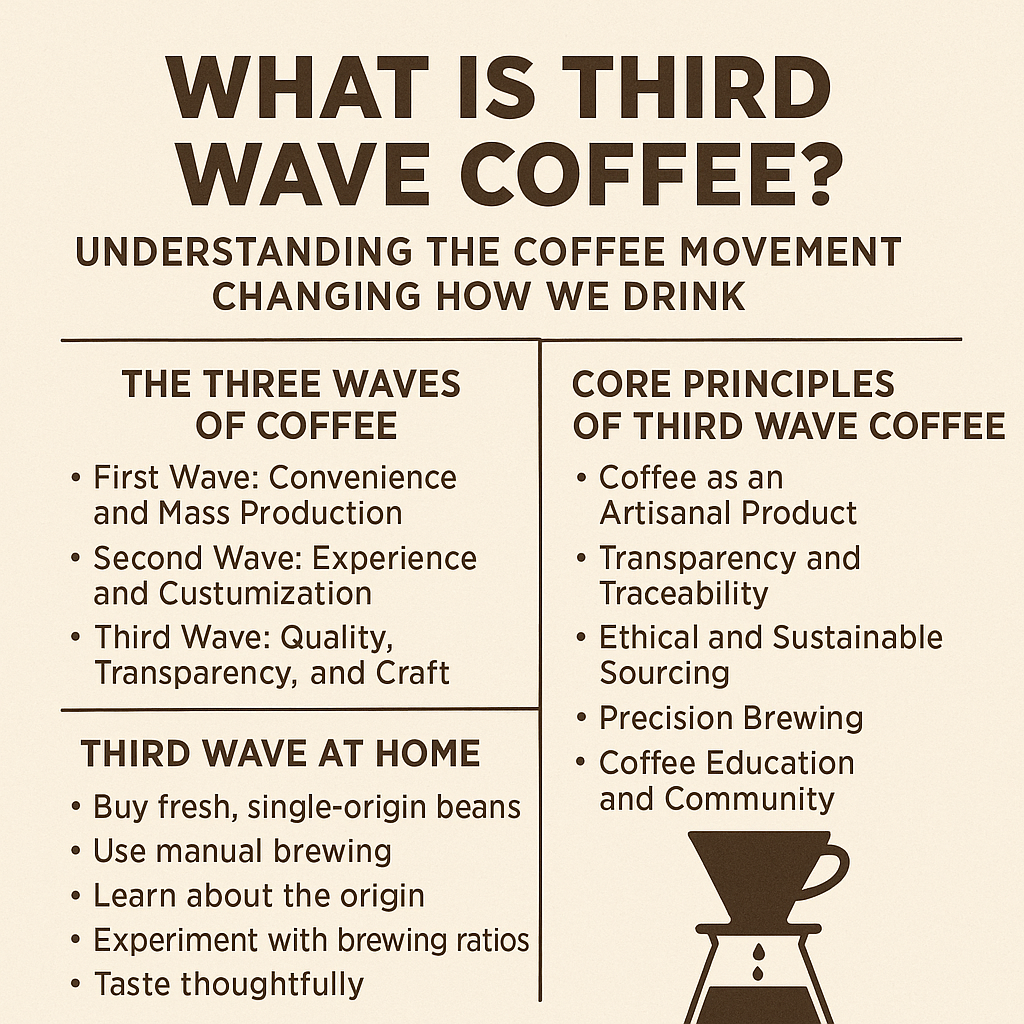
The Three Waves of Coffee: A Quick Overview
The term “waves” refers to different eras of coffee culture, each with its own priorities and style.
First Wave (1800s–1980s): Convenience and Mass Production
- Focused on making coffee widely available and affordable
- Introduced instant coffee, canned coffee, and supermarket brands (e.g., Folgers, Maxwell House)
- Little concern for flavor or origin — just caffeine and convenience
Second Wave (1980s–2000s): Experience and Customization
- Brought the coffee shop culture (Starbucks, Peet’s)
- Introduced espresso-based drinks (lattes, cappuccinos) to the mainstream
- Emphasized the experience: cozy cafes, baristas, milk foam art
- More focus on origin and roast, but still mass-scale
Third Wave (2000s–Present): Quality, Transparency, and Craft
- Treats coffee as an artisan product, like wine or craft beer
- Prioritizes bean origin, processing, roasting, and brewing
- Focus on single-origin beans, direct trade, and sustainability
- Elevates the craft of brewing, including manual methods like V60, Chemex, and siphon
Core Principles of Third Wave Coffee
1. Coffee as an Artisanal Product
- Every coffee has unique flavor characteristics based on terroir (soil, climate, altitude)
- Roasters aim to highlight these traits rather than roast them away
- Light and medium roasts are common to preserve natural flavor notes
2. Transparency and Traceability
- Labels list origin, farm, altitude, varietal, process, and roast date
- Consumers want to know where their coffee comes from, how it was grown, and who grew it
3. Ethical and Sustainable Sourcing
- Emphasis on direct trade or fair trade
- Long-term relationships between roasters and farmers
- Better prices paid to producers
- Environmental concerns like shade-grown farming and organic methods
4. Precision Brewing
- Manual brewing methods are preferred:
- Pour-over (V60, Chemex)
- AeroPress
- Siphon
- Espresso with weighed doses and measured extractions
- Baristas are trained like craft professionals
- Focus on grind size, water temperature, brew time, and ratios
5. Coffee Education and Community
- Third wave cafés offer tastings, cuppings, and brewing classes
- Coffee is not just consumed — it’s studied, appreciated, and celebrated
- Emphasis on community, storytelling, and connection through coffee
How to Identify a Third Wave Coffee Shop
Look for:
- Minimalist or clean design
- Baristas using scales, gooseneck kettles, or manual brewers
- Menus with origin, notes (like “blueberry” or “honey”), and processing method
- No syrups or flavorings (in most cases)
- Seasonal, rotating coffee offerings
- Transparent sourcing info and direct relationships with farms
Third Wave at Home
You don’t have to visit a trendy café to be part of the movement. Here’s how to bring third wave principles home:
- Buy fresh, single-origin beans from specialty roasters
- Use manual brewing (V60, AeroPress, Chemex)
- Grind coffee fresh, just before brewing
- Learn about the origin and story behind your beans
- Experiment with brewing ratios and methods
- Taste thoughtfully — take notes, compare origins, and refine your palate
Critics and Challenges
Not everyone embraces the third wave:
- Some find it elitist or overly complicated
- Others miss the comfort and simplicity of flavored or mass-market coffee
- Accessibility and pricing can be barriers for some consumers
But at its core, third wave coffee isn’t about snobbery — it’s about respecting the bean, the farmer, and the process.
Final Sip: A Better Cup, from Farm to Mug
Third wave coffee has transformed the way we think about — and taste — coffee. It celebrates transparency, sustainability, craft, and flavor like never before.
Whether you’re new to the world of specialty coffee or a longtime enthusiast, embracing third wave principles can turn your morning cup into a daily ritual of discovery and appreciation.
Because when coffee is treated with care at every step, it becomes more than just a beverage — it becomes a work of art in a cup.